


.png?width=27&height=27&name=Group(1).png)

-1.svg)
-1.svg)


-2.svg)


%201-1.webp?width=148&height=74&name=our%20work%20(2)%201-1.webp)




.svg)





Most enterprises are already investing in AI, but very few are scaling it successfully.
The reason? Disconnected data systems, unreliable outputs, and AI models that still operate without real business context.
That’s exactly where RAG chatbots (Retrieval-Augmented Generation) are redefining enterprise AI in 2026.
RAG bots infuses AI chatbots with real-time and accurate information from your company’s internal knowledge.
They are far different from traditional bots and combine large language models with real-time enterprise data. It enables context-aware responses, right knowledge retrieval, and answers backed by a source.
According to recent industry estimates, the global RAG market size is expected to reach USD 3.33 billion by 2026, driven by the need for accuracy, compliance, and real-time decision-making.
For the CTOs and businesses, it is becoming the core infrastructure for improved customer experience and knowledge management.
Want to know how cutting-edge RAG chatbots are enhancing customer conversations and solving huge enterprise challenges? This blog post will take a deep dive into discovering how RAG-based AI can redefine efficiency, accuracy, and competitive advantage for your enterprise in 2025! Read on to learn.
Why Are RAG Chatbots Leading the Market in 2026?
Deploying a chatbot in 2026 is easier; however, deploying one that is able to deliver value, accuracy, and business-ready answers at scale can be tough. This is where most businesses struggle and leverage RAG chatbots. These chatbots are becoming the default architecture, and here are the reasons why:
Eliminates "AI Hallucination"
AI hallucination is a significant barrier to enterprise adoption. A RAG chatbot significantly reduces AI hallucinations. RAG systems are reported to achieve higher accuracy on queries about recent events or updated policies. It also excels at answering relevant questions accurately because it references up-to-date, verified information.
Real-Time, Context-Aware Relevance
RAG-powered systems dynamically retrieve information from your internal sources, such as documents, databases, APIs, and live systems, at the moment a query is made. This ensures every response is not only contextually accurate but also up-to-date with the latest business data.
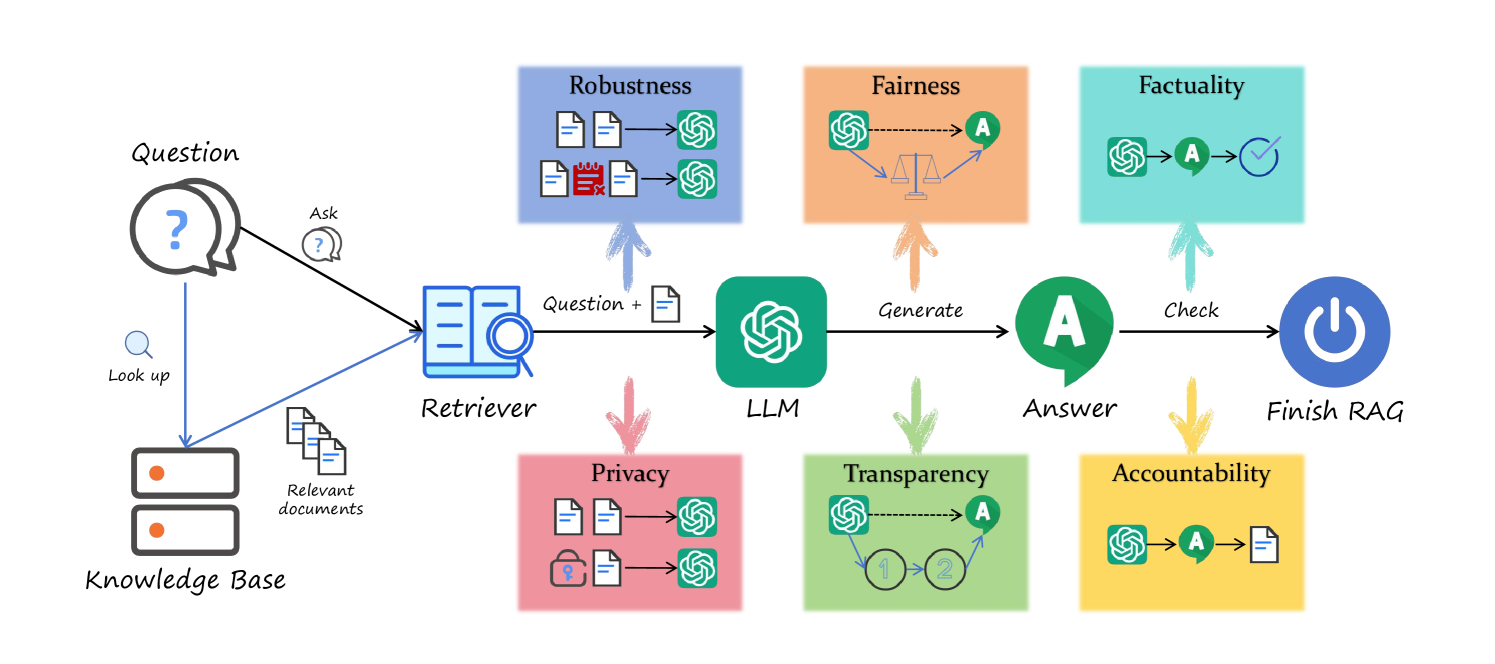
RAG in customer support significantly improves the chat experience by providing more accurate, context-aware, and engaging interactions.
Trust and Transparency
RAG systems use source-backed responses to boost customer satisfaction and trust. It does not offer a response in isolation; rather, it collects information from verified sources and the knowledge base to generate accurate responses. It can cite exactly where the information is retrieved from. This kind of trust and transparency is vital, especially for highly regulated industries.
Cost-effective & Scalable
Training or fine-tuning an LLM on your specific data can be very expensive and resource-intensive. RAG offers a more efficient path in this regard, as it keeps the base model unchanged and only updates the knowledge layer. . So, instead of retraining the entire LLM, you just need to update your knowledge base. The RAG system handles the retrieval process.
Improves Knowledge Management
Many companies have a large volume of documents. Finding specific information from these documents can be difficult. They also struggle with fragmented and unstructured data spread across multiple systems.
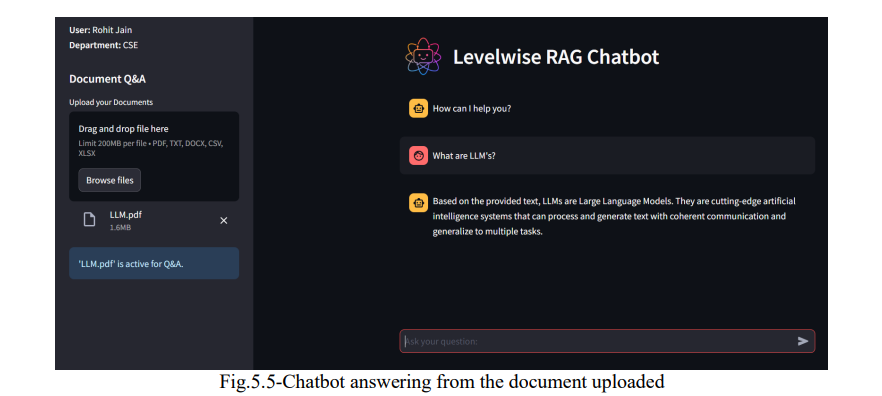
RAG chatbots help manage evolving business data efficiently. You can ask a question in simple language. These AI chatbots work in a way that quickly provides the most relevant and current information from your internal systems.
Boosts Operational Efficiency
RAG chatbots reduce the workload for customer support teams by automating responses. So, the virtual agent handle the customer interactions efficiently.
Now that we have understood why RAG is shining in the upcoming years, the reasons are behind it! Let us take a look at some of the best AI chatbots using RAG.
Also Read : ChatGPT vs. Traditional Chatbots: A Comparative Analysis
Top RAG-Based AI Chatbots in 2026
As enterprise leaders, you need to know which RAG-based AI chatbots are truly making a difference. There are many chatbots on the market, each offering unique features and capabilities tailored to different enterprise needs. Here’s a quick rundown of the top RAG-based AI chatbots in 2026.
Many of these leading chatbots also offer a free plan with basic features and usage limits, allowing businesses to try them out before committing to paid tiers.
1. ChatGPT with Custom GPTs
OpenAI’s ChatGPT, powered by GPT-4 Turbo, has become the most used AI tool and is a full-scale enterprise AI platform. Embedded retrieval tools like file uploads, web browsing, and third-party plugins, along with generative AI and machine learning capabilities, significantly enhance its enterprise utility. On the contrary, “Custom GPTs” allow businesses to define specific RAG logic and knowledge sources. ChatGPT with Custom GPTs can also write articles and generate extensive written content. This makes it suitable for content creation tasks.
Key Features for Enterprises:
- Broad Capabilities: This AI chatbot is extremely versatile for a wide range of tasks, including content generation and data analysis.
- Customizable RAG: Custom GPTs allow you to explicitly define what data sources the AI should use for retrieval.
- Extensive Plugin Ecosystem: It connects with thousands of external knowledge bases to extend its reach.
2. Microsoft Copilot Studio
Businesses leverage the Microsoft ecosystem, such as SharePoint and M365, and allow organizations to design and deploy AI copilots. These have built-in RAG capabilities across the businesses and offer results that are accurate. It seamlessly integrates with enterprise data sources while making it the best choice for internal knowledge automation and enhancement of workflow.
Why it matters:
- Native integration with Microsoft tools and enterprise data
- Low-code environment for building AI assistants
- Secure, compliant, and scalable for enterprise deployment
3. Kore.ai
Built on the industry-leading, analyst-recognized agent platform.
It is built on the industry-leading and is an analyst-recognized agent platform. It is highly leveraged by the industries that wish to deploy RAG-powered virtual assistants at scale. Combing natural language processing, retrieval system, and automation it supports customer services, HR operations and other tasks. It is best for complex enterprise workflows and omnichannel automation.
Why it matters:
- Pre-built enterprise use cases across industries
- Omnichannel deployment (web, voice, messaging)
- Strong orchestration of workflows + AI interactions
4. CustomGPT.ai
It is best when businesses want to integrate a no-code RAG chatbot deployment on internal data. CustomGPT.ai focuses on simplifying RAG adoption by allowing businesses to build custom AI chatbots trained on their own data, without coding. It’s particularly useful for fast deployment and document-heavy use cases.
Why it matters:
- No-code setup for quick implementation
- High accuracy for document-based retrieval
- Ideal for customer support and internal knowledge bots
5. DeepSeek Chat
DeepSeek Chat comes from a strong, open-weight Large Language Model (LLM) family. It includes RAG capabilities right out of the box. It’s gaining a lot of traction, especially for its multilingual support. It is a strong choice for enterprises looking to deploy RAG-based chatbots with greater control and lower costs.
DeepSeek models are also available on platforms like Hugging Face, which support open-source AI development and deployment.
Why it matters:
Multilingual Support: It is excellent for global operations and diverse workforces.
Fast Performance: Deep Seek is optimized for quick response times. This feature is crucial for high-volume interactions.
Open-Weight Advantage: It offers more flexibility and control for enterprises. It is especially important for businesses that prefer to customize and deploy models in-house.
6. Qwen Chat
Alibaba’s powerful Qwen-3 model series backs Qwen Chat. It combines robust RAG with impressive multilingual capabilities. It is particularly popular in Asian markets and among developers who like to work with open-source tools. Qwen Chat is designed for enterprises that need high-performance RAG systems across multiple languages and regions. As an open source chatbot, Qwen Chat offers flexibility, community-driven development, and customization options for a wide range of workflows.
Why it matters:
Strong Multilingual Support: It is an ideal chatbot for international business operations. It offers strong multilingual capabilities with a focus on Asian languages.
Powerful RAG Capabilities: It efficiently retrieves and integrates information from various sources.
Active Open-Source Community: Qwen Chat benefits from an active open-source community of Alibaba. It supports continuous improvements and customization options.
7. Perplexity AI Pro
Perplexity AI Pro is a hybrid search and RAG assistant that has become a favorite for researchers and developers. It is one of the popular chatbot apps that provides detailed answers with clear citations. This allows you to upload documents for analysis and retrieval by the RAG system, and follow up on conversation threads.
Why it matters:
Source Citations: Sourcing citations is essential for verifying information and building trust. This is especially important in knowledge management or compliance.
Document Uploads: Perplexity allows direct access to RAG over your internal reports, manuals, and data sheets.
Follow-up Conversations: It supports complex and multi-turn interactions for in-depth problem-solving.
8. Anthropic Claude 3
Anthropic’s Claude 3 family of models, that is, Opus, Sonnet, and Haiku, are known for their strong reasoning and long-context understanding. While not a RAG chatbot itself, it’s designed to integrate seamlessly with retrieval tools like LangChain to enable powerful RAG applications.
Claude 3 is also capable of generating a human-like response. This makes interactions feel more natural and engaging.
Why it matters:
Exceptional Reasoning: It can effectively handle complex queries and logical inferences.
Long-Context Window: Claude-3 can process and understand very lengthy documents or conversation histories. These types of capabilities are considered ideal for legal or research applications.
Enterprise Alignment: Since it is developed with safety, ethics, and responsible AI as core principles, it aligns well with corporate governance.
9. MindOS
MindOS is not just a chatbot. It is a RAG-plus-agent framework that leverages AI agent technology to orchestrate complex workflows and automate business processes. This means it can orchestrate multiple RAG-based AI agents to collaborate on complex tasks, such as customer support, research, contact centers handling or planning. These features make this AI chatbot highly modular and scalable.
Key Features of MindOS
Multi-Agent Orchestration: It can handle multi-step and sophisticated tasks by coordinating different AI components.
Modular & Scalable: It is built and can be expanded to your Artificial Intelligence capabilities as required.
Complex Workflow Automation: It is ideal for automating intricate business processes that require multiple AI interactions.
10. Cohere Coral
Cohere Coral is a conversational AI platform designed specifically for enterprise Questions & Answers. It is optimized for speed and effective retrieval. It is currently in closed beta but promises robust RAG capabilities for businesses.
Cohere Coral is considered one of the best AI chatbot solutions for enterprise-level question and answer applications.
Why it matters:
Enterprise-Optimized: Cohere is built from the ground up for business-critical applications.
Fast & Efficient Retrieval: It is designed for quick and accurate answers from your internal knowledge bases.
Focus on Q&A: It streamlines the process of extracting answers from large datasets.
11. LlamaIndex Agents
LlamaIndex is a powerful framework that helps bridge your data with LLMs. LlamaIndex Agents are a step further. It provides a way to build sophisticated RAG-enabled AI agents using popular open-source LLMs like Mistral and Claude.
LlamaIndex Agents are frequently recommended by AI experts for building advanced RAG-enabled solutions.
Why it matters:
Framework-Driven Control: LlamaIndex agents offer developers deep control over how RAG is implemented.
Open-Source LLM Integration: This feature provides the flexibility to choose and swap underlying language models.
Complex Agent Building: It enables the creation of more sophisticated AI assistants that can perform multi-step tasks.
12. Vanna AI
Vanna AI is a unique RAG assistant specifically designed for interacting with SQL databases. It allows users to ask questions in plain English, and Vanna translates those questions into SQL queries, retrieves data, and provides the answer. For example, a user can ask, "Show me the total sales for last month." Vanna AI will generate the corresponding SQL query to fetch that information.
Why it matters:
- Using SQL native RAG, Vanna AI bridges the gap between natural language and structured database queries.
- Vanna AI enables business users to get insights from databases without requiring SQL knowledge.
- It makes corporate data more accessible to a wider range of employees.
RAG vs Fine-Tuning vs Agentic AI: What Should You Choose in 2026?
As enterprise AI adoption matures, one question comes up repeatedly: Should you use RAG, fine-tuning, or agentic AI? The answer depends on your data, use case, and level of automation required. Here’s a clear comparison to help you decide:
|
Criteria |
RAG |
Fine-Tuning |
Agentic AI |
|
Core Function |
Retrieves real-time data + generates answers |
Trains a model on custom data |
Executes tasks using AI agents |
|
Best For |
Knowledge retrieval, customer support, internal tools |
Domain-specific language or tone |
Complex workflows, automation |
|
Data Freshness |
Always up-to-date |
Static |
Depends on integrated systems |
|
Cost |
Moderate (no retraining needed) |
High (training + maintenance) |
High (infrastructure + orchestration) |
|
Scalability |
High |
Limited (needs retraining for updates) |
High but complex |
|
Accuracy Control |
High (source-grounded responses) |
Medium (depends on training data) |
High (if properly orchestrated) |
|
Implementation Speed |
Fast |
Slow |
Medium to slow |
|
Maintenance |
Easy (update knowledge base) |
Complex (retrain model) |
Complex (manage agents + workflows) |
|
Typical Use Cases |
Chatbots, search assistants, knowledge bases |
Legal, medical, domain-specific models |
AI copilots, automation systems |
How to Choose the Right RAG Chatbot?
Choosing the right RAG chatbot is not simply about features; it is all about the right fit, the scalability it can offer, and its long-term impact.
As there are already multiple platforms available, the decision to choose the right RAG bot depends on how your solution aligns with the data, workflow, and compliance needs. Some of the critical factors that businesses must evaluate before they invest in a RAG-based system are:
1. Define Your Primary Use Case
Start with clarity: What problem are you solving?
- Customer support automation
- Internal knowledge assistants
- Sales enablement or research tools
- Industry-specific use cases (healthcare, finance, legal)
If you operate in regulated industries, data privacy and compliance become non-negotiable, requiring tighter control over how data is accessed and processed.
2. Choose the Right LLM Strategy
Your chatbot is only as good as the model behind it. You typically have two options:
- Cloud-based LLMs for faster deployment, less maintenance
- Open-source / self-hosted LLMs for greater control, better data privacy
Enterprises prioritizing security and customization often lean toward self-hosted or hybrid models.
3. Plan Your Data Layer
RAG depends on how efficiently your data is stored, indexed, and retrieved. You’ll need to decide between:
- Managed vector databases: Easy to scale, low operational overhead
- Self-hosted databases: Full control, better for sensitive data
A poorly structured data layer will limit even the most advanced AI models.
4. Evaluate Retrieval Quality
Not all RAG systems retrieve information equally well.
- Basic retrieval: Keyword or similarity-based matching
- Advanced retrieval (with reranking): Refines results for higher accuracy
Modern enterprise systems also use hybrid and context-aware reranking.
5. Deployment & Data Privacy Strategy
Where your RAG system runs directly impacts security, compliance, and scalability.
Common deployment options include:
- Cloud-based: Flexible and scalable
- On-premise: Maximum control and compliance
- Hybrid: Balance between performance and security
For industries like finance or healthcare, on-prem or hybrid setups are often essential.
Future Trends in RAG Chatbots
RAG chatbots are evolving from simple Q&A tools into core enterprise AI systems focused on automation, accuracy, and scalability. Here are some key advancements we can expect in RAG as a Service, which will improve AI conversations for businesses:
1. Agentic RAG Will Enable Action, Not Just Answers
RAG systems are not limited to generating answers. In 2026, they seamlessly integrate agentic AI capabilities and take the necessary actions for the queries. Beyond responding to requests, it can resolve the tickets, process requests, and move responses to real business outcomes.
2. Multi-Agent Systems Will Improve Reliability
Businesses move from single to multi-agent architecture, where the multiple agents seamlessly collaborate to perform tasks simultaneously. Suppose one agent retrieves the information, another validates the response, and the third one executes actions.
3. Retrieval Quality Will Be the Key Differentiator
The competitive advantage in RAG systems is shifting from the language model to the retrieval layer. Advanced retrieval techniques such as hybrid search and context-aware reranking are becoming essential for improving response quality.
4. Private and On-Prem RAG Will Grow
Enterprises are increasingly adopting on-premise and hybrid RAG deployments. Running RAG systems closer to the data ensures better control, faster response times, and improved security. This trend is especially critical for industries such as finance and healthcare, where data sensitivity is a top priority.
5. Open-Source Models Will Drive Flexibility
The rapid advancement of open models like DeepSeek and Qwen is making it easier for enterprises to build customized RAG solutions. These models provide greater flexibility, reduce dependency on vendors, and allow organizations to optimize infrastructure costs.
Conclusion
As we've explored, RAG-based AI chatbots are no longer just a futuristic concept. They are the present and future of intelligent conversational AI for enterprises. By grounding powerful language models in your company's own verified data, RAG solutions overcome the limitations of traditional AI systems.
The landscape of RAG solutions is diverse. It brings unique strengths to the table. However, choosing the right path requires careful planning and a deep understanding of your specific business needs.
This is where Signity Solutions helps you. As a leading AI consulting company, we specialize in helping enterprises navigate the complexities of AI adoption. Our team is proficient in offering custom RAG chatbot development services tailored precisely to your unique challenges and data ecosystems.

Mangesh Gothankar


Ashwani Sharma
Achin Verma
Frequently Asked Questions
Have a question in mind? We are here to answer. If you don’t see your question here, drop us a line at our contact page.
How is a RAG chatbot different from traditional AI chatbots?

A RAG chatbot retrieves real-time information from your data sources before generating responses, making it more accurate and context-aware than traditional chatbots that rely only on pre-trained knowledge.
Can RAG chatbots work with enterprise internal data securely?
Yes, RAG systems can be deployed on-premise or in private environments, ensuring sensitive enterprise data remains secure and compliant with regulations.
What is the biggest challenge in implementing RAG systems?
The biggest challenge is optimizing the retrieval layer. Poor data structuring or weak retrieval can reduce accuracy, even if the underlying AI model is strong.
Do RAG chatbots require constant retraining?
No, RAG chatbots typically do not require retraining. You can update the knowledge base, and the system will automatically retrieve the latest information.





.png?width=352&name=AI%20Cybersecurity%20Threats%20(4).png)
.png?width=352&name=microsofts-recall-feature%20(6).png)