


.png?width=27&height=27&name=Group(1).png)

-1.svg)
-1.svg)


-2.svg)


%201-1.webp?width=148&height=74&name=our%20work%20(2)%201-1.webp)




.svg)





.png?width=670&height=445&name=AI%20Cybersecurity%20Threats%20(4).png)
Retrieval-Augmented Generation (RAG) is transforming customer experience by enabling chatbots and virtual assistants to deliver real-time and context-aware data. Grounding answers in real data is redefining AI-powered customer support.
There is a rising demand for intelligent automation in customer service, and businesses are making a shift from traditional large language models, which may deliver outdated and inaccurate information.
As the global chatbot market grows at about 23% a year from an estimated US$ 11 billion in 2026, the focus shifts from basic automation to AI systems that instantly resolve customer queries.
And this is where RAG-powered chatbots step in. It offers a competitive advantage for businesses while taking a lead in AI chatbot development. It delivers grounded responses with far fewer hallucinations and allows access to business data and documentation in real time.
RAG does not rely only on pre-trained data. It connects chatbots to the internal knowledge ecosystem, which turns into a revenue-driving support engine. Analysts expect this shift to continue. Gartner predicts that agentic AI will autonomously resolve 80% of common customer service issues without human intervention by 2029 and cut operational costs by 30%. RAG is the layer that keeps those automated answers tied to what your business actually says and does.
Here is a complete blog that helps you understand what RAG is, how it works, and how essential it is for modern customer support. It also covers RAG for customer support automation, the limits you should plan for, and how to roll it out.
 Generate
Key Takeaways
Generate
Key Takeaways

- RAG enhances AI chatbots by combining retrieval and generative models for accurate, context-aware responses.
- Multimodal and voice integration allows chatbots to process text, images, audio, and video simultaneously.
- Faster, personalized support reduces resolution times, increases efficiency, and boosts customer satisfaction.
- RAG can integrate with enterprise systems while maintaining data privacy and compliance.
- RAG reduces hallucinations but does not remove them, so track resolution quality along with deflection.
Understanding RAG in Customer Service
Retrieval-augmented generation (RAG) is a model that combines retrieval and generation methods to create accurate and relevant responses. It has two main parts: a retriever and a generator.
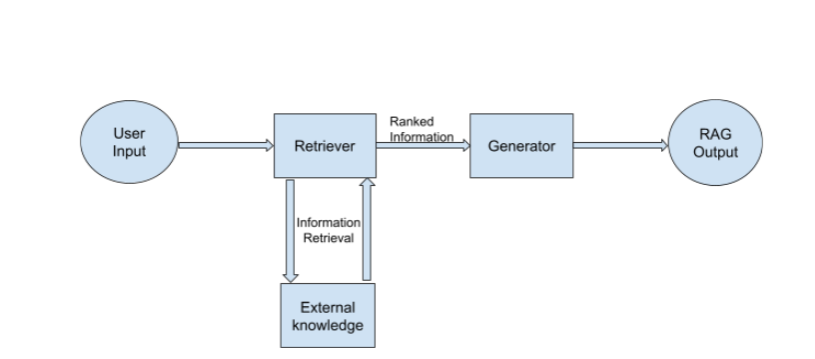
The retriever finds the most relevant information from a large collection of data. It often uses techniques like dense passage retrieval, where documents are represented as dense vectors in a high-dimensional space. These vectors help to identify the most relevant documents based on the user's query.
The generator takes this information and creates a coherent response. By joining these two parts, RAG can generate answers that are both accurate and rich in context.
.png?width=673&height=272&name=unnamed%20(5).png)
The Retrieval Augmented Generation model retrieves relevant documents based on input, combines them with the original prompt, and sends them to a text generator for final output. This approach helps language models access current information while avoiding the need for retraining and producing reliable results through retrieval-based generation.
With the retrieval-first approach, AI chatbots can:
-
Reduce hallucinations in AI responses
-
Deliver factual and current information in real-time
-
Reduce the need to retrain models every time information changes
-
Use real-time knowledge access to help scale support
Present State of Customer Service
Modern customer service is a combination of human support and AI-driven automation. However, when it comes to handling complex and real-time customer needs, it fails.
The traditional support system used human agents for streamlined chat, managing calls and sending emails. Though the model is smooth and personalized, it lacks scalability, response time, and consistency.
As AI in customer support increases, businesses have started integrating chatbots and virtual assistants to automate interactions and reduce operational costs. However, these systems still face challenges like:
-
Restricted or limited access to real-time and business-related data.
-
Inconsistent responses due to LLM hallucinations.
-
Poor handling of complex queries or those that are context-heavy
-
Heavy dependence on retraining and manual updates
That gap explains why AI is high on the 2026 agenda. In a Gartner survey of 321 customer service and support leaders, 91% said executives were pressuring them to implement AI in 2026, and 58% planned to upskill agents into knowledge management specialists because both AI and self-service depend on accurate, current content.
RAG-Oriented Customer Service
RAG-powered customer service solutions combine real-time knowledge retrieval with advanced generative AI to deliver faster, more accurate, and context-aware support experiences.
Unlike traditional AI models, RAG systems continuously pull information from live enterprise data sources, helping keep responses relevant, updated, and grounded in factual data.
Researchers from LinkedIn presented a paper at SIGIR 2024 that introduces a new method combining Retrieval-Augmented Generation (RAG) with knowledge graphs (KGs). This method aims to improve customer service question-answering systems. As a result, it reduces the median time to resolve issues by 28.6%. The same paper reported a 77.6% improvement in retrieval accuracy (MRR) over the baseline, and the system now runs in LinkedIn's customer service operations.
|
Parameters |
Traditional AI Model |
RAG – Enhanced AI |
|
Data Source |
Uses only pre-trained knowledge |
Retrieves real-time information |
|
Response Accuracy |
Prone to outdated or hallucinated facts |
More accurate and up-to-date |
|
Adaptability |
Requires re-training for new data |
can dynamically fetch new information |
Not only this, but RAG also helps ensure that responses are accurate and based on the latest and most relevant details rather than just generated by AI.
How Does RAG Work in Customer Service Chatbots?
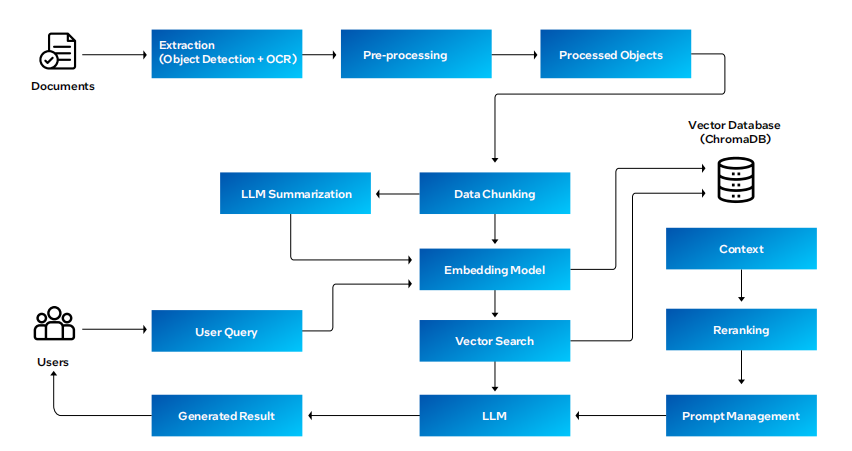
RAG in customer service chatbots follows a structured approach that combines semantic search, offers data retrieval in real-time, and generates responses in real-time. It ultimately helps deliver accurate and contextual information.
1. Understanding the Query
Using natural language understanding (NLU), the chatbot analyzes the customer query. It seamlessly identifies the context and key entities, while ensuring there is an accurate interpretation of even the most complex and multi-step queries.
2. Retrieving Information
Rather than matching the keywords, RAG relies on semantic search and vector embeddings to get the most relevant information. Whether it is an FAQ query for the customer, knowledge base, or internal documents, it helps retrieve every kind of information.
3. Generating Context
The data is retrieved and is then combined with the original query from the customer. It creates a context-rich prompt and ensures that AI models have access to the most relevant and up-to-date information.
4. Creating the Response
The large language model (LLM) reads that prompt and writes an answer based on the retrieved passages instead of relying on its memory alone. Many systems also attach links to the source articles, so customers and agents can check the answer.
5. Refining the Response
The output is refined using AI guardrails, business rules, and compliance checks to ensure consistency, tone alignment, and accuracy. It is highly critical for enterprise-grade customer support.
By combining the retrieval and generator components, RAG can produce responses that are both factually accurate and contextually rich.
Why do customer service teams need RAG?
Despite advancements in AI-powered customer support, chatbots still struggle to deliver accurate, context-aware, and real-time responses.
- Maintaining smooth conversations with bots can be challenging. And, if a chatbot is unable to adjust its tone or keeps giving the same answers repetitively, users may become frustrated.
- Understanding human language can be challenging for the bots. Therefore, chatbots can often struggle with slang or sarcasm. So this makes it difficult for them to understand the conversation's context.
- Outdated data access might be a concern if the AI system is not updated regularly.
- AI models usually learn from large datasets. These datasets may contain biases that may result in unfair or misleading answers.
- Developing and maintaining advanced chatbots requires a lot of time, skills, and resources.
- Chatbots can handle routine inquiries. But they often struggle to handle unusual ones. So, if any customer asks about a new service or product, the chatbot may give the wrong answer.
The cost of a wrong answer is real. In February 2024, British Columbia's Civil Resolution Tribunal ordered Air Canada to compensate a customer after its chatbot wrongly said bereavement fares could be claimed retroactively. The tribunal found the airline did not take reasonable care to ensure its chatbot was accurate and rejected the argument that the chatbot was responsible for its own statements. Grounding answers in the current policy text is one of the most direct ways to prevent this kind of error.
A RAG-based chatbot can effectively tackle these issues. Virtual assistants are one of the real-life use cases that can benefit the most from RAG incorporation. It organizes information and makes it easier for chatbots to find the right answers for users.
This helps in improving the accuracy and relevance of responses. A data-as-a-product approach allows RAG to access current data from different enterprise systems, not just static documents.
Large language models (LLMs) in conversational AI can bring updated customer or product information from different sources. This information, along with the user's question, helps the LLM give more accurate and personalized answers.
Benefits of RAG for Customer Service Chatbots
RAG-powered chatbots are far different from traditional ones and enable real-time and accurate responses. It offers answers in real-time and helps businesses drive measurable business outcomes like quick resolution and improved customer satisfaction.
1. Faster Resolution Times
RAG helps agents find information quickly. This way, RAG bots can help speed up responses, reduce hold times, and make customers happier.
2. Better Accuracy and Consistency
RAG uses real-time data retrieval to help prevent outdated information. This helps ensure that answers are accurate and consistent across all communication channels.
3. Increased Agent Efficiency
RAG can quickly find and create answers. This helps agents confidently manage complex questions.
4. Proactive Support
You can create RAG systems to predict what customers need by collecting data from past questions or common inquiries. By offering helpful answers ahead of time, RAG cuts down on repeated questions. This leads to a better experience that feels more personal.
5. Reduced Operational Costs
The RAG-powered chatbots automate the repetitive queries and handle the higher volume of queries that otherwise would be difficult to manage manually. New information goes into the knowledge base instead of requiring model retraining, so updates are faster and cheaper, which keeps operating costs down.
6. Seamless Integration with Enterprise Systems
RAG can connect directly with CRMs, internal databases, and APIs. This enables chatbots to receive real-time information from across the organization. It ensures that every response is grounded in accurate business data and improves workflow efficiency.
7. Consistent Omnichannel Support
The response remains uniform across all the customer touchpoints. Whether it is chat, voice assistant, or email support, customers receive consistent and accurate responses, no matter the platform or channel they use.
RAG for Customer Support Automation
RAG for customer support automation means using retrieval-grounded AI to handle the repetitive parts of support while people focus on the cases that need judgment. In 2026, it usually shows up in four places:
-
Customer self-service: a chatbot or virtual assistant answers order, billing, and how-to questions from the live knowledge base and links the source article.
-
Agent assist: the system suggests answers and related articles during a call or chat and drafts replies for the agent to review.
-
Ticket triage and summaries: it reads an incoming ticket, finds similar past cases, suggests a priority and category, and summarizes long threads for the next agent.
-
Agentic workflows: after retrieving the right policy, the AI completes the next step through connected systems, such as checking an order, updating an address, or issuing a refund within set limits.
Where RAG Automation Reaches Its Limits
RAG improves answers, but it does not fix everything. Outdated or thin articles still produce weak answers, retrieval can miss the right passage, and sensitive cases such as billing disputes, complaints, and legal questions need a person. Set confidence thresholds so the bot hands off to an agent, with the conversation history attached, when it is unsure.
Customers expect that option. A Gartner survey published in August 2026 found that 87% of customers say companies using generative AI for customer service must provide access to a human agent.
Best practices for using RAG effectively in chatbot systems
Many organizations face a tough choice: whether to build RAG-powered chatbots or use generic AI virtual assistants.
Building your own chatbot gives you more control and customization. But along with this, it also takes a lot of time, resources, and expertise. So, when planning to go for customized RAG chatbots, it is crucial to follow some of the practices to ensure success. Here are some of the best practices to follow.
Understand the RAG Architecture
To create a customer chatbot, you need to understand two key types of models: Retrieval and Generation Models.
The retrieval model searches through varied documents to find useful information. Then, the generation model uses advanced language techniques to craft a clear response. This is what the architecture of RAG is all about. Its two-step process enhances customer interactions and helps ensure the response meets the user’s needs.
Create and Maintain a High-Quality Knowledge Base
The retrieval component in RAG works better when the knowledge base is strong. To achieve this, you should:
-
Make sure that your knowledge base covers a wide range of topics that are important to your users. Update it regularly so it reflects the latest information.
-
Organize the knowledge base clearly and index the content for quick access. You can use metadata and tags to improve search results.
-
Incorporate user feedback regularly to improve and expand the knowledge base. Fill in gaps and update information based on frequent questions and new trends.
- Give every article an owner and a review date. Gartner's 2026 survey points to backlogs of knowledge articles and inconsistent content review as common problems, and a RAG system can only retrieve what the team keeps accurate.
Optimize Retrieval Mechanisms
Effective retrieval is key for RAG-based chatbots. To improve how they find information, you should:
- Use search algorithms that can understand meaning, synonyms, and context to make searches more accurate.
- Apply pre-trained models for retrieval tasks to make the search process easier and reduce the need to start from scratch.
- Incorporate custom retrieval models to fit your specific domain and user needs. Fine-tuning these models helps improve the relevance and accuracy of the information retrieved.
- Combine keyword and vector search (hybrid search) and add a reranking step, so exact product names, error codes, and policy numbers match as reliably as general questions.
Prioritize Data Security and Privacy
Handling user data responsibly involves secure access, compliance with regulations like GDPR, and transparency with users. Therefore, ensure that encryption and access controls are in place to protect sensitive information while adhering to data protection standards. Limit retrieval by user permissions so one customer's data never reaches another, and tell users when they are talking to an AI. Under the EU AI Act, the transparency rules in Article 50, including disclosing that a person is interacting with an AI system such as a chatbot, apply from 2 August 2026.
Consistent Evaluation
Regular evaluation and improvement are crucial for maintaining high-quality interactions. Track performance metrics and conduct A/B testing to gauge the effectiveness of the RAG implementation. Useful metrics include resolution rate (not only deflection rate), first-contact resolution, CSAT, escalation rate, and groundedness, which measures how often an answer is backed by the retrieved source. Review a sample of conversations every week, because a deflected ticket is not always a solved one.
How to Implement RAG in Customer Support, Step by Step
- Pick two or three high-volume use cases, such as order status, returns, or password resets.
- Audit the knowledge base. Remove duplicates, fix outdated articles, and add owners and review dates.
- Connect your data sources: help center, CRM, ticket history, product documentation, and policy files.
- Set up retrieval. Split documents into chunks, create embeddings, use hybrid search with reranking, and apply access controls.
- Write prompts and guardrails that require answers to come from retrieved sources, add citations, and define when the bot must hand off to a person.
- Pilot with a small group, measure resolution rate, CSAT, and escalations, then expand.
Common Challenges and How to Handle Them
-
Poor retrieval: Test with real customer questions, tune chunk sizes, and use hybrid search and reranking.
-
Stale content: Assign article owners and set review dates so the knowledge base stays current.
-
Latency and cost: Cache frequent answers, limit the amount of retrieved context, and route simple questions to smaller models.
-
Security: Use permission-aware retrieval, filter inputs for prompt injection, and log every answer with its sources.
Related Read: 10 Real-World Examples of Retrieval Augmented Generation
Future of RAG in AI Chatbots For Customer Service
Combining real-time retrieval, generative AI, and multimodal capabilities allows chatbots to deliver more personalized and proactive customer support. Businesses can expect these systems to minimize the resolution time, boost customer satisfaction, and handle complex queries seamlessly.
Integration of RAG with advanced audio (VoiceRAG)
VoiceRAG is a tool that allows real-time speech-to-speech communication. It combines Azure OpenAI’s GPT-4o Real-Time API with Azure AI Search. This makes it easy to have natural conversations using voice and up-to-date information.
VoiceRAG is part of a trend called multimodal AI, where it works seamlessly with audio. This means consumers can talk to chatbots in a way that feels almost like talking to another person.
When it comes to customer support, VoiceRAG can help RAG-based chatbots provide quick and accurate spoken answers to customer questions. This improves communication and speeds up problem-solving.
RAG and Multimodal AI
Multimodal AI allows systems to process text, images, videos, and audio simultaneously, giving chatbots a deeper understanding of customer intent. RAG-powered systems can combine text-based queries with visual or audio inputs to deliver precise, context-aware responses.
For example, a customer could send a photo of a product issue while asking a question by voice, and the system would analyze both inputs to provide an accurate solution quickly. This technology makes virtual assistants more intuitive, human-like, and capable of handling complex, real-world interactions, setting the standard for 2026 AI customer support.
Agentic RAG
Agentic RAG goes one step further. The AI decides what to retrieve, checks whether the result answers the question, searches again if it does not, and then acts through connected tools. Gartner expects agentic AI to resolve 80% of common customer service issues without human intervention by 2029. The market behind it is also growing fast. Analyst reports value the RAG market at roughly US$ 1.5 billion to US$ 1.9 billion in 2025 and project growth of more than 30% a year through 2035.
Bottom Line
As businesses adapt to changing customer service trends, RAG is becoming a powerful tool. It connects static knowledge bases with active AI responses so that chatbots and virtual assistants can provide accurate, relevant, and timely support. This incorporation of RAG in chatbots can lead to greater customer satisfaction, fewer escalations, and better efficiency for operations.
By grounding AI in your organization's unique knowledge, RAG ensures that chatbots give relevant and suitable responses. This improves customer satisfaction and loyalty.
So, don’t let generic AI answers weaken your customer support. Explore our RAG-as-a-service platform, which makes it easy to use RAG in your current systems.
Let us help you enhance your customer support experience.
Frequently Asked Questions
Have a question in mind? We are here to answer. If you don’t see your question here, drop us a line at our contact page.
What Industries can benefit the most from RAG Chatbots?

How does RAG ensure Data Privacy and Security?
RAG ensures data privacy and security by using secure databases, encrypted connections, and access controls. It only retrieves information from trusted sources and complies with standards like GDPR and HIPAA to prevent unauthorized access. AI techniques also help by anonymizing sensitive user data. This means businesses can use RAG-powered chatbots without risking privacy.
What is the RAG chatbot?
A RAG chatbot is an advanced type of AI chatbot that mixes two methods to give better answers: one that retrieves information and another that generates responses. Unlike regular chatbots that use only pre-existing data, RAG chatbots can find and pull in relevant information from external sources, such as knowledge bases, FAQs, and documents. This means users get accurate and timely answers that meet their needs.
How are chatbots and virtual assistants being used in customer support activities?
Chatbots and virtual assistants are changing customer support. They can answer common questions, help with troubleshooting, schedule appointments, and manage tickets automatically. These tools work 24/7, reduce wait times, and improve user experiences by offering quick, accurate, and personalized responses. Businesses use chatbots and virtual assistants to make customer interactions easier and increase user satisfaction.






.png?width=352&name=Semantic%20Search%20and%20RAG%20(1).png)