


.png?width=27&height=27&name=Group(1).png)

-1.svg)
-1.svg)


-2.svg)


%201-1.webp?width=148&height=74&name=our%20work%20(2)%201-1.webp)




.svg)





.png?width=670&height=445&name=agentic-ai-strategy-for-enterprise-software%20(12).png)
Are you aware that by 2026, around 80% of businesses are expected to have deployed generative AI in production environments? Moreover, 90% of businesses are advancing their AI capabilities, marking a tragic shift from experimentation to real-world deployment.
What exactly changed? The change is that AI is no longer a backend capability, but a visible tool that has an influence on how businesses operate, market, and scale.
Whether it is content generation, automation, or predictive analytics, the AI applications actually redefine almost every industry. The rise of AI software applications has enabled businesses to leverage capabilities that once required a large workforce and massive infrastructure.
In this blog, we break down the top AI applications, including the most popular AI apps 2026, their real-world use cases, and how these latest artificial intelligence applications are shaping the future of business.
 Generate
Key Takeaways
Generate
Key Takeaways

- AI adoption is expanding rapidly across industries.
- Generative and multimodal AI are driving innovation in content and analytics.
- Embedded AI is becoming a standard feature in software and platforms.
- Responsible AI with human oversight ensures ethical and accurate use.
- Industry-specific AI is transforming healthcare, finance, legal, and manufacturing.
Why Artificial Intelligence Applications Are Growing at an Unprecedented Pace?
Artificial intelligence applications are no longer experimental; they are now a core layer powering modern businesses.
By 2026, Organizations increasingly rely on AI tools and AI software to analyze data, automate repetitive tasks, and improve operational efficiency at scale. Advances in machine learning, deep learning techniques, and increasingly sophisticated AI algorithms now allow AI systems to process structured and unstructured data with higher accuracy than ever before.
According to recent insights from McKinsey & Company, nearly 80% of organizations already use AI applications in at least one business function. Adoption is accelerating fastest in areas such as marketing, customer support, software development, and data analysis. The adoption of AI programs in these verticals helps teams make faster, data-backed decisions.
What’s driving this momentum is not just innovation, but measurable business impact. Modern AI systems can analyze vast datasets in real time, power predictive analytics, improve sentiment analysis, and enhance fraud detection across finance, e-commerce, and security systems. As a result, businesses are shifting from experimentation to long-term AI adoption.
Generative AI, in particular, has moved beyond novelty. Reports from Deloitte and PwC show that organizations piloting generative AI have transitioned to production use, leveraging AI models to generate AI-driven content, support multiple languages, and power AI writing tools.
This shift explains why demand for the top AI applications and most popular AI apps in 2026 continues to grow rapidly across industries.
How Many AI Applications Are Available Today?
As of 2025 reports by Mckinsey, 88% of organizations globally use artificial intelligence in at least one business function, up from 55% in 2023. This rapid increase highlights how deeply AI apps and AI tools are becoming embedded in everyday business operations.
Additionally, 71% of companies now use generative AI in regular workflows. From free AI tools for content creation to enterprise-grade AI software running on platforms like Google Cloud, organizations are adopting AI across use cases ranging from marketing automation to advanced data analysis.
The widespread availability of AI models, open-source frameworks, and cloud-based AI programs has significantly lowered the barrier to entry. Even small teams can deploy AI solutions that analyze data, optimize workflows, and automate repetitive tasks without large infrastructure investments.
The Scale of AI Adoption Today
Pinpointing the exact number of artificial intelligence applications available today is nearly impossible. Thousands of new AI applications and tools are launched every year, spanning content creation, healthcare, finance, predictive analytics, computer vision, and autonomous systems.
What matters more than raw numbers is how widely AI is being used across industries and platforms:
-
A significant majority of businesses now rely on AI systems for daily operations such as customer support, risk assessment, and data analysis.
-
Generative AI tools are used weekly by professionals to generate human-like language, summarize insights, and assist with research and planning.
-
AI-powered features are increasingly embedded into existing software, including CRM platforms, analytics dashboards, and marketing automation tools.
-
Major social media platforms and search engines now rely on AI algorithms for content ranking, moderation, and personalization
This shift signals that artificial intelligence is no longer a standalone capability. Instead, AI is becoming an invisible but essential layer integrated directly into web pages, business applications, and enterprise platforms.
From sentiment analysis and object detection to predictive analytics and security systems, the applications of artificial intelligence are expanding rapidly. As AI continues to evolve, organizations are moving toward AI-first strategies where machine learning and generative AI drive long-term growth, innovation, and competitive advantage.
Therefore, a concrete answer to this might not be possible since the number keeps changing very rapidly. After tech giants like IBM, Microsoft, Google, and Apple released their artificial intelligence applications, tech giant Meta will also release its chatbot on WhatsApp. It will enable users to generate original images in group messages or personal chats.

Challenges and Limitations of Artificial Intelligence Applications
Despite their advantages, artificial intelligence applications are not without limitations. Understanding these challenges is critical for responsible and effective adoption of AI applications.
Some common concerns include:
-
Data privacy and security risks, especially when handling sensitive information
-
Inconsistent accuracy, particularly in generative AI software applications that may produce incorrect or misleading outputs
-
Over-reliance on AI-generated content can impact originality and human judgment.
-
Integration challenges when AI tools don’t align with existing systems or workflows
For these reasons, many organizations adopt a hybrid approach that combines AI-driven automation with human oversight. Such efforts enable brands to ensure quality, compliance, and ethical use.
How Artificial Intelligence Applications Create Real Business Value?
The rapid adoption of artificial intelligence applications is driven by tangible results, not speculation. Organizations implementing AI across workflows consistently report improvements in efficiency and scalability.
Studies from global consulting firms show that AI-enabled processes can deliver:
-
Significant productivity gains by automating repetitive tasks
-
Faster turnaround times for content creation, analysis, and customer support
-
Improved decision quality through data-driven insights
-
Better customer experiences via personalization and responsiveness
In many cases, businesses also report faster returns on investment compared to traditional software implementations. As a result, AI is increasingly viewed as a growth enabler, and not just a cost-saving mechanism.
Which are the Best AI Apps on the Market?
There are hundreds of AI software applications that are launched every month, and you need to choose the right one that can feel overwhelming. Well, you must focus on use case, scalability needs, and how well this platform integrates with your existing ones.
Here is a list of the most popular AI apps in 2026, which cover content creation, automation and productivity.
 However, the key lies in selecting the right platform tailored to your needs. One should also consider factors such as the team's technical expertise, industry experience, and security measures.
1) Grammarly
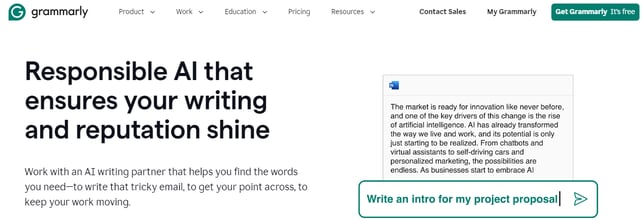
Grammarly is one of the most widely used AI applications for writing enhancement. This AI-powered application helps one write meaningful sentences without worrying about grammar, syntax, or tone of their compositions. Grammarly has over 30 million active users and uses advanced machine-learning techniques to facilitate seamless writing.
This app offers a handbook that explains common rules and usage for those willing to learn the subtle nuances of the language. It also has an active Facebook community where viewers can interact with and learn from each other.
2) Copy.ai
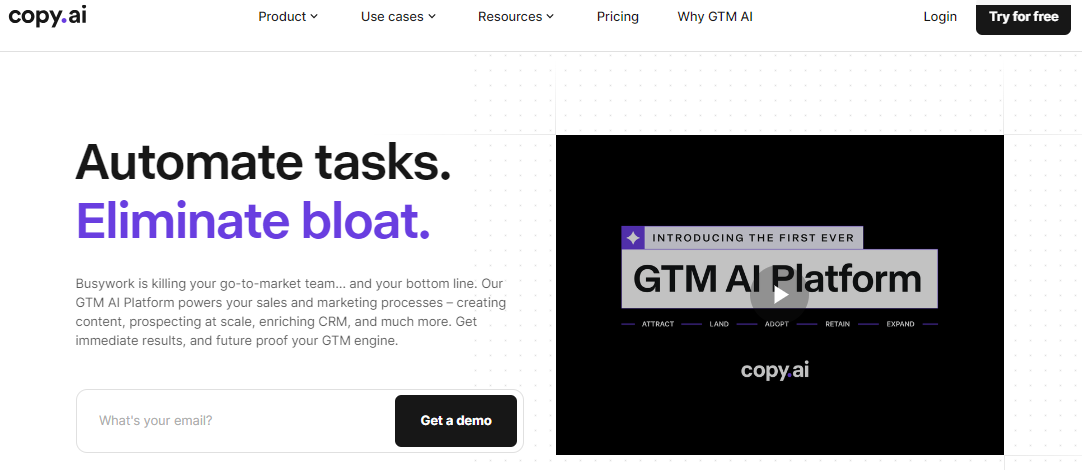
This artificial intelligence application can produce endless long-form content with minimal user input, and the user interface has been kept simple for even newbies. Are you experiencing writer's block? Do you need ideas for sales copies, product descriptions, blogs, or campaign copies? You have your confidante here.
This AI application has prebuilt templates that suggest how you can use emotional triggers to market your product better, like the AIDA copywriting template, the "pain-agitate-solution" template, and the QUEST copywriting template. The best part? The product offers a 7-day trial period during which you can use it and determine if it suits your needs.
3) ChatGPT
Remember how your Instagram feed was suddenly bombarded with ChatGPT posts? People all over the world were left absolutely speechless when OpenAI released ChatGPT in 2022. Life has never been the same since.
It is an NLP (Natural Language Processing) Chatbot that is powered by artificial intelligence. It is one of the best AI apps, and it is designed to give human-like responses to everything you ask.
Related read: How to Use ChatGPT for Your Business in 2024?
It can assist you with tasks like help-desk support, retrieving the right documents in time, defining project timelines, assisting coders with debugging or helping in defining an itinerary for a travel plan, aiding in market-research and surveys, et al.- is there anything that ChatGPT cannot do today?
4) Otter.Ai
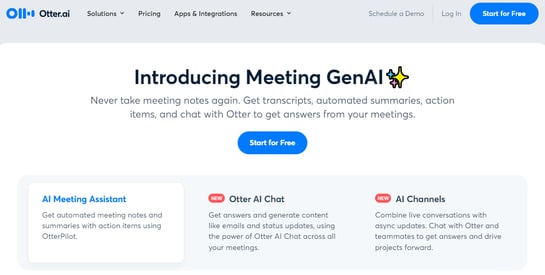
Have you ever finished a meeting only to wish later that you at least had the summary of high-impact decisions to refer to later on? Artificial Intelligence applications like Otter.ai do exactly that for you.
Other than that, it takes notes and transcribes audio from various sources like live conversations, even for you. It comes with an inbuilt speech recognition technology that recognizes the sources of different audio.
5) Gemini (formerly Bard)
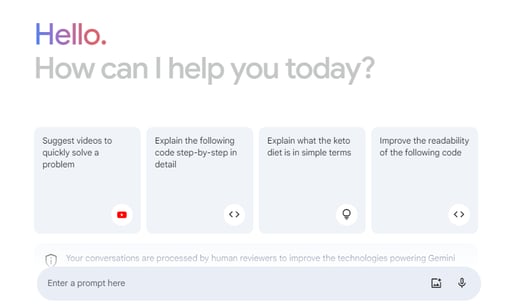
Google released this conversational chatbot, formerly called Google Gemini, on March 21st, 2023. Since then, the Gemini chatbot has received countless LLM upgrades. This conversational AI chatbot was a tipping point in AI development.
It performs specific tasks like multimodal reasoning, language understanding, mathematical reasoning, describing images, discerning big data sets, translating texts, and analyzing codes . Although it can write content as well, but you might have to use ai rewriter to avoid detection.
6) Wix
Want to create an engaging website for your audience but need help figuring out where to start? Wix should be your go-to buddy for this predicament. You need to provide the instructions for this application, and based on that, this application will unveil a professional-looking website.
If you visit their site, they boast of being so simple and user-friendly that the audience doesn't even require a how-to guide (although they have provided a detailed one).
Related read: Why Every Business Needs a Website?
7) Asana
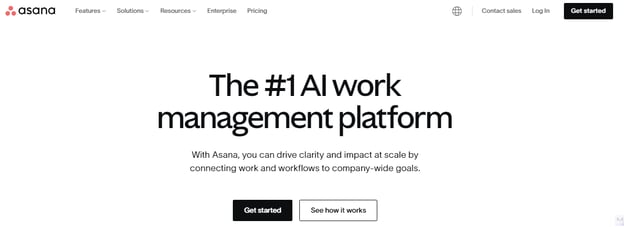
We all know of those draggy, supercilious meetings that businesses conduct every day to monitor employees' performance. Sprint meetings, large cups of coffee, and suppressed yawns—this AI assistant will exempt you from all of the above!
When it comes to marketing, you can use artificial intelligence applications like Asana for strategic operations, planning events, executing your fundraising goals, volunteering onboarding, etc.
8) Sanebox
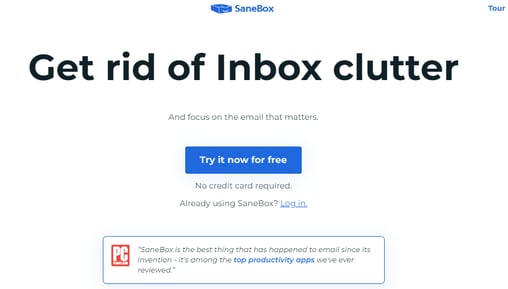
Remember that oft-quoted saying by Mr. Einstein, "If a cluttered desk is a sign of a cluttered mind, of what, then, is an empty desk a sign?". This one is sure to crack people up any time of the day. Despite that, it often becomes a necessity to keep your email inbox organized. It automatically archives unimportant emails in your inbox and, in turn, keeps you "sane," as some users have quoted.
The 'blackhole' option enables you to get rid of annoying senders for good.
The in-app ‘Sanereminder' utility reminds the user when the receiver hasn't replied to their mail.
9) Synthesia
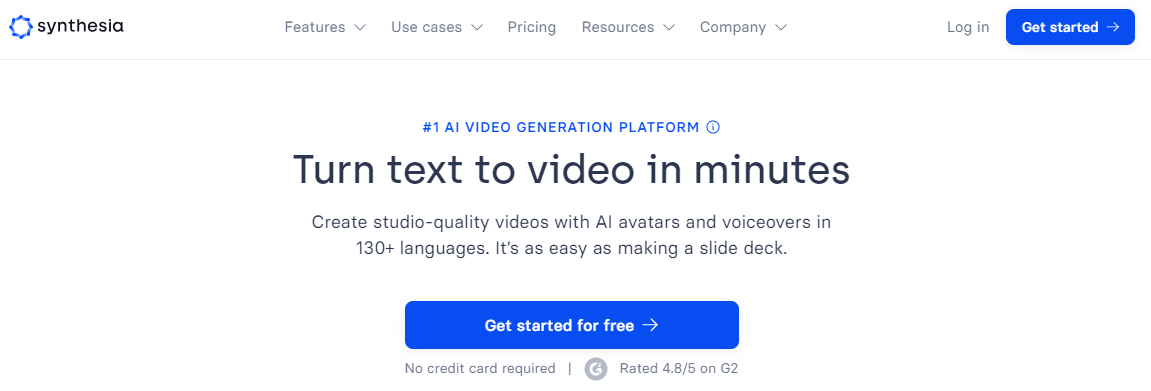
How many times have you stopped dead in your tracks because this AI application can create an avatar based on the instructions you provide? It is a multimodel AI application and offers over 150 avatars to choose from. Scores of amazing video templates amplify the video creation process. The multilingual platform also has a cloud media library, which gathers your music, images, font assets, etc. To test some of Synthesia's features, try AI video maker with some of your business text.

The recent collaboration of Descript AI with Synthesia is amazing, as it lets users harness the editing capabilities of the Descript app. Users can use their voices in the videos, and the pricing model has been kept very flexible.
10) MURF
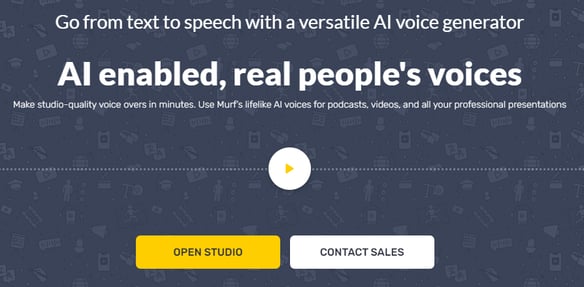
Want to generate human-like voices that can act as voiceovers for videos, podcasts, or presentations? Murf.ai is a boon in the domain of AI development, especially for tech enterprises. It also aids in voice cloning, transforming your videos into professional-looking ones.
It presents users with the option to select from 120 text-to-speech voices, which are available in 20 languages. Having a coveted repository of over 8000 soundtracks and high-quality transcription abilities, this AI app offers highly prompt customer service and a very collaborative workspace. In order to cater to a vast global audience, the app currently supports over 20 languages.
11) Dall-E
Even a decade ago, if you had shared with someone the possibility of creating images from texts, they would have probably laughed it off. But thanks to advanced AI development today, DALL.E, lo and behold, it's the perfect meeting ground for a marketer's imagination with pixels. From conjuring fictitious landscapes to mythological creatures, this AI magic wand can spin up anything to suit your needs.
There are umpteen use cases for the Dall.E application—from designing logos for your startup, which might be in its nascent stage, to creating entire comics and educational material equipped with infographics. The prebuilt templates, including mascot logo templates for brands seeking a playful or character-driven identity, help businesses save a lot of time.
With the help of this application, you can not only create covers for your notebooks but also design entire comics and educational material equipped with infographics.
12) AI STUDIO
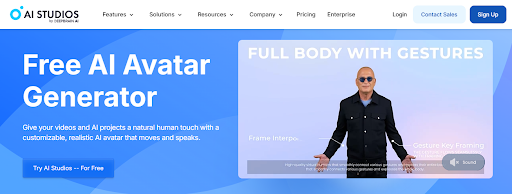
Who needs lights, cameras, and actors when you’ve got AI? AI Studio video & avatar creation platform empower solo creators and global teams to produce high-quality videos using hyper-realistic AI avatar in just minutes. No need for cameras and crews; Just your script and the magic of artificial intelligence is enough.
It creates avatars that replicate real human expressions like lip-syncing, natural body language, and custom gestures & movements, making your content feel personal, engaging, and incredibly lifelike. Also, AI Studio connects you with your audience on a human level. You don’t have to step in front of a camera. With AI Studio, you get access to 150+ avatars, 30+ language support, and smart tools like Photo Avatars, Instant Avatars, Conversational AI, and Video Dubbing, to make content that speaks to everyone.
Global brands like Samsung, Lenovo, BMW, and Pfizer already trust it. From helping travelers at airport kiosks to preserving voices for people with ALS, AI Studio is doing more than just making videos. It’s helping people connect in meaningful ways.
13) Descript.ai

From overdubbing voice cloning (create clones of your voice or anybody else's) to fine-tuning the quality of audio, from filtering out noises in the audio to removing filler words like umm hmm, I guess, etc., you can even start the podcast that you have been wanting and seamlessly transcribe meeting notes for your audience.
One stellar feature of this application is that even if your guest isn't in the same room, you can record both tracks if you are the meeting host.
14) LALAL
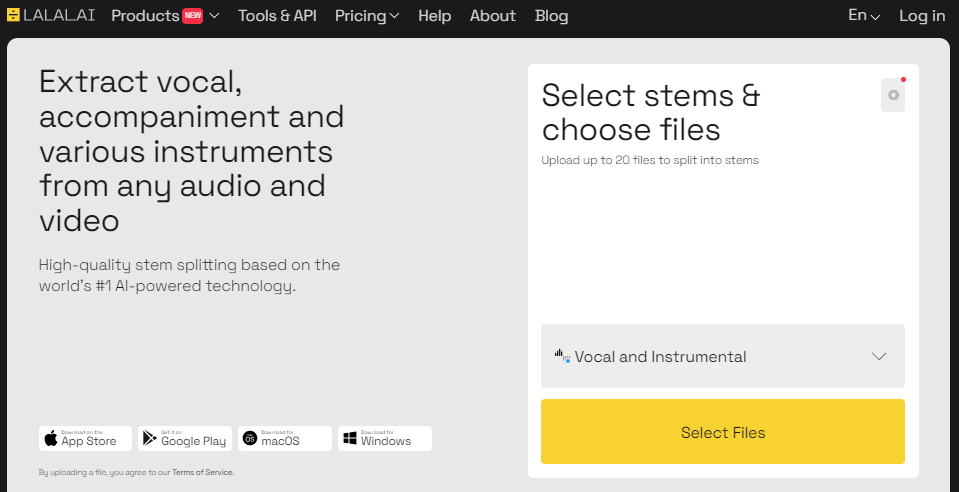
It is touted as the world's first 10-stem system splitter and is a very effective music-source separation application. It is based on the latest neural network in AI development, Phoenix, and is phenomenally easy to use. You just have to upload your files, and this application can separate up to a limit of 10 stems.
Once you give the instructions to start processing the file, it's all done from your end. The pricing has been kept very cost-effective. You can avail yourself of up to 90 minutes of audio splitting for as little as $10. This application supports many languages and facilitates different payment methods, too.
15) LOOKA
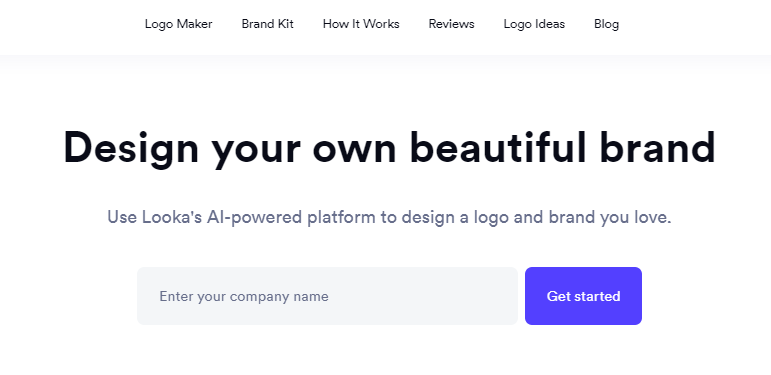
If you have been using social media for a while, you know how hard it is to stand out in the crowd. Now imagine if Artificial Intelligence worked in tandem with your digital marketing acumen, letting you choose from over 300+ templates, and helping you create an AI-based logo by using a logo maker app that completely showcases the essence of your brand. Who wouldn't want a complete makeover of their brand, right? It is totally possible now, thanks to emerging AI trends and staggering levels of AI development.
You can click on any logo design to explore different variations. Once you purchase a logo, the team sends you all of the files and requirements, including vector logo files, PNG files, etc. There is also a "Business Name Generator," which relies on sentiment analysis, in case you are unable to decide on the name of your venture.
16) Lavender.ai
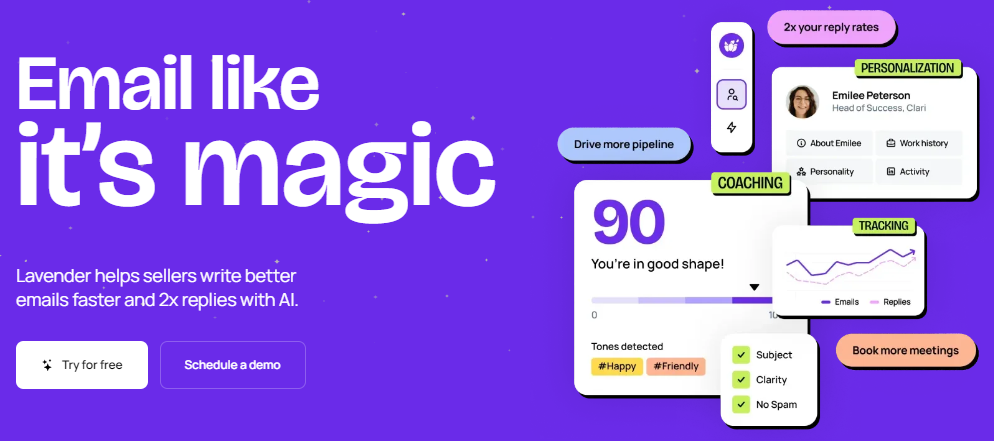
Lavender.ai relies on analyzing the data and suggesting email templates to help you get better outcomes (higher response rates). It is touted to be the finest cold email assistant. The platform is holistic, from effectively displaying your response/ open mail rates, suggesting themes for improvement, and writing a mail from scratch to improving an already composed mail.
It also provides users with a personalized assistant that scrapes information from the target viewers' LinkedIn profile sections, such as "About Me," "Work History," and more. Even though the recommendations/ suggestions can be dicey, they certainly serve as a blessing to those who are still starting with cold emails.
17) Fueon
.png?width=1248&height=626&name=unnamed%20(4).png) Are you tired of struggling with your writing? This paraphrasing tool can help. Fueon is a AI‑powered paraphrasing and writing assistant tool and uses advanced technology like natural language processing and machine learning to rephrase your text while keeping the original meaning.
Are you tired of struggling with your writing? This paraphrasing tool can help. Fueon is a AI‑powered paraphrasing and writing assistant tool and uses advanced technology like natural language processing and machine learning to rephrase your text while keeping the original meaning.
This tool goes beyond simple word swaps. It understands your content and rephrases it naturally, improving readability and fixing grammar issues. You can choose from various writing styles, such as formal, casual, creative, or more to suit your needs.
Fueon paraphraser is easy to use. Simply paste your text, select your preferred writing style, and click "paraphrase." The tool then generates a unique and engaging version of your content.
This tool is not just for students; it's helpful for anyone who wants to improve their writing, from content writers to professionals.
Latest Artificial Intelligence Application Trends in 2026
As AI continues to evolve, several trends are shaping the next generation of artificial intelligence applications:1.
1. Agentic AI
Agentic AI systems can plan, make, and execute decisions autonomously without human intervention. Whether the process involves a single task or you need to execute multiple tasks, Agentic AI acts on its own and performs them. The AI agents manage comprehensive tasks like automating the entire marketing campaign, handling customer queries, running financial analyses, and more. Companies choose agentic AI to free humans from repetitive and decision-making processes.
2. Multimodal AI
Multimodal AI combines text, images, voice, and more and processes them into a single intelligent system. It enables natural interactions by understanding multiple forms of input and delivering results. For example, AI assistants seamlessly understand the questions, analyze if you share any images or voice, and summarize it in a written report.
3. Embedded AI
AI is not a lonely tool. It can be embedded directly into the software and platforms we use daily. From CRMs that recommend customer engagement strategies to marketing platforms that auto-generate ad creatives, AI integration enables real-time decision-making without manual intervention. Businesses are leveraging embedded AI to enhance productivity and improve user experiences seamlessly.
4. Industry-specific AI
AI is becoming tailored for specific verticals. Healthcare applications can assist in diagnostics and patient monitoring, finance AI can predict market trends and detect fraud, and legal AI streamlines contract analysis. These domain-focused AI systems provide actionable insights while meeting sector-specific compliance.
5. Responsible AI Adoption
As AI is being adopted widely, organizations place a strong emphasis on transparency, AI governance, and accountability. The covers explainable AI models, data privacy safeguards, and more. They help companies build trust with customers and regulators, reducing the risks associated with AI misuse.
These trends indicate a shift from experimentation toward AI-first product strategies, especially among mid-market and enterprise organizations.
Off-the-Shelf AI Applications vs Custom AI Solutions
While off-the-shelf AI applications work well for common use cases, they may not always address complex or industry-specific challenges. Many growing businesses eventually reach a point where customization becomes essential.
Off-the-shelf tools offer speed and convenience, whereas custom AI solutions provide:
-
Greater control over data and security
-
Tailored workflows aligned with business processes
-
Scalability as an organizational need to evolve
-
Competitive differentiation through proprietary intelligence
This is where AI consulting and development partners play a critical role. Helping organizations assess readiness to identify opportunities helps build solutions that deliver long-term value.
So, What’s Stopping You?
Do you still need clarity regarding which AI apps would suit your business? We get it. Take your time, and you can consider getting in touch with an AI consulting company like Signity Solutions.
You would be surprised to know that besides using an AI application, building your own customized AI application is quite easy, too. The key is to get started somewhere, and this listicle will help you choose the right AI application after identifying the challenge your venture is currently facing.

Mangesh Gothankar


Ashwani Sharma
Achin Verma
Frequently Asked Questions
Have a question in mind? We are here to answer. If you don’t see your question here, drop us a line at our contact page.
What are the most common applications of Artificial Intelligence in everyday life?

The applications of artificial intelligence are deeply embedded in everyday life today. From virtual assistants on smartphones and smart home devices to recommendations on e-commerce websites and social media platforms, artificial intelligence AI helps analyze user behavior, identify patterns, and personalize experiences. AI-powered tools also support navigation using real-time traffic data in Google Maps, improve online shopping journeys, and optimize content visibility across digital channels.
How do Artificial Intelligence applications use historical and structured data?
Artificial intelligence applications rely heavily on historical data and structured data to train machine learning models. By analyzing vast amounts of past data, AI systems can perform accurate risk assessment, forecasting, and decision-making. This approach is widely used in finance AI, marketing AI, healthcare diagnostics, and quality control processes across industries.
How are AI-driven apps transforming marketing and social media strategies?
AI-driven apps are helping marketing teams automate administrative tasks, generate human language for blog posts, email campaigns, and social media posts, and improve targeting accuracy. Tools powered by the latest AI models can analyze user behavior, optimize Google Ads performance, and tailor content for different social media platforms, enabling marketers to scale faster with better ROI.
What role do AI agents play in business Automation?
An AI agent can autonomously handle multi-step workflows such as automating tasks, responding to customer queries, managing virtual assistants, and processing data collection in real time. These agents are increasingly used to automate administrative tasks, support internal operations, and enhance productivity across departments without constant human intervention.
How is Artificial Intelligence used in healthcare and patient data management?
In healthcare, artificial intelligence AI supports early detection of diseases by analyzing patient data, medical images, and signals from the human body. AI applications help with facial recognition for patient verification, object detection in medical imaging, and secure handling of sensitive data. Data security remains a top priority, ensuring compliance while enabling faster diagnosis and improved care outcomes.
Are there free AI applications available for businesses and individuals?
Yes, many artificial intelligence applications offer a free plan, free tier, or free version with limited free credits. These options allow users to experiment with AI-powered web-based tools before upgrading. In the past few years, free AI access has accelerated adoption among startups, students, and small businesses exploring applications of artificial intelligence.
What skills does an AI engineer need to build modern AI applications?
An AI engineer typically needs a strong foundation in computer science, data structures, and machine learning models. Skills in handling structured data, training models to analyze vast amounts of information, and working with the latest AI models are critical. AI engineers also focus on data security, scalability, and ethical AI development.
How is Artificial Intelligence improving e-commerce platforms?
In e-commerce, artificial intelligence applications power personalized product recommendations, dynamic pricing, inventory forecasting, and fraud risk assessment. AI analyzes customer interactions, purchasing history, and user behavior to improve conversions and customer satisfaction while automating tasks like customer support and order tracking.
How do AI applications help with translation and content creation?
AI-powered tools use machine translation and natural language processing to generate human language across multiple languages. These applications assist businesses in creating blog post content, marketing assets, and customer communications efficiently while maintaining consistency and tone across regions.
What should businesses consider before adopting AI-driven applications?
Before implementing AI-driven apps, organizations should evaluate data collection practices, data security standards, scalability needs, and alignment with existing workflows. Whether using off-the-shelf tools or custom solutions, the goal should be to automate tasks responsibly, support decision-making, and deliver long-term business value.






.png?width=352&name=top-ai-tools-financial-services%20(3).png)
.png?width=352&name=agentic-ai-strategy-for-enterprise-software%20(2).png)