

.png?width=27&height=27&name=Group(1).png)

-1.svg)
-1.svg)


-2.svg)


%201-1.webp?width=148&height=74&name=our%20work%20(2)%201-1.webp)




.svg)





In today’s increasingly complex global supply chain, logistics companies constantly struggle with freight documentation and compliance.
Nearly 55% of logistics firms are automating document workflows. Especially, with AI-powered document processing to reduce administrative processing times by up to 60%, the freight industry can significantly overcome the workload.
Meanwhile, Gartner predicted in 2024 that over 70% of freight logistics organizations view AI solutions as essential for future competitiveness, with many accelerating investments in automation to stay ahead. Traditional manual handling still drives costly delays, inaccuracies, and compliance risks — pushing 72% of companies to expand their use of automation tools in the next 12–18 months.
Against this backdrop, modern freight automation tools are no longer optional. They are critical for streamlining documentation and attaining necessary operational efficiency. This blog explores the top AI-powered solutions reshaping warehouse automation, freight documentation, and compliance workflows today.
 Generate
Key Takeaways
Generate
Key Takeaways

- Freight automation tools significantly reduce paperwork by reducing risks related to compliance, even for global logistics operations.
- AI-driven freight document automation enables improved customs clearance and regulatory accuracy.
- Modern freight automation platforms outperform traditional freight forwarding software, offering unmatched scalability.
- Custom AI solutions offer greater flexibility through integration, which can drive long-term ROI when standard tools fall short
What Is Freight Document Automation?
Freight document automation refers to the use of AI-driven technologies to digitize, extract, validate, and manage freight-related documents across logistics workflows. In modern logistics operations, Automation cuts manual data entry, which leaves no scope for email-based document handling or spreadsheet tracking.
The modern-day intelligent systems automatically process documents in real time. As freight volumes grow and regulations become stricter, freight document automation has become a core pillar of end-to-end freight automation.
AI-powered systems can automate a huge range of freight documents, such as Bills of Lading (BOL), commercial freight invoices, etc. Using OCR, machine learning, and NLP (natural language processing), these tools accurately extract data. Further, the data fetched is validated against compliance rules for the successful routing of documents through predefined workflows.
The key difference between traditional freight forwarding software and AI-powered freight automation platforms lies in intelligence and adaptability. Legacy systems often rely on manual inputs and static rules, while modern freight automation tools continuously learn from data.
In other words, automated systems can flag compliance risks proactively. Besides, automated exception handling helps faster processing, which aids compliance and overall profits.
Why Compliance is a Major Challenge in Freight Operations?
Freight operations face increasing compliance pressure due to constantly changing regulations across countries. Managing customs rules, trade policies, and the custom documentation requirements manually becomes difficult to scale. Besides, the process becomes prone to errors as shipment volumes grow.
Key compliance challenges can be listed as:
- Regulatory complexity: Different rules for each geography based on cargo type
- Shipment delays: Errors in documents can lead to customs holds and port congestion
- Fines and penalties: Non-compliance can trigger financial and legal consequences
- Customer dissatisfaction: Repeated delays erode trust.
Modern freight automation tools help overcome these challenges by enabling real-time and centralized audit trails. Through AI-powered freight document automation, businesses can proactively detect errors, ensure regulatory accuracy, and maintain compliance visibility across all freight operations—reducing risk while improving speed and reliability.
Key Capabilities to Look for in Freight Automation Tools
Choosing the right freight automation tools requires more than basic digitization. To truly streamline operations and ensure compliance, logistics businesses should evaluate freight forwarding operations. It can help work on platforms based on the scalability and integration goals.
- AI-powered OCR for document digitization: Accurately converts digital freight documents into structured data, even with varying formats.
- Automated data extraction and validation: Eliminates manual entry by extracting key shipment and customs data while offering real-time accuracy.
- Rule-based compliance checks: Ensure adherence to compliance surrounding trade and tax regulations across regions with configurable rules.
- Integration with existing freight forwarding software: Seamlessly connects with TMS, ERP, and legacy systems to avoid operational disruption.
- Secure document storage and audit readiness: Maintains centralized document repositories with full traceability.
- Workflow automation and exception handling: Automates approvals, escalations, and corrections when documentation or compliance issues arise.
Together, these capabilities enable end-to-end freight automation for logistics companies. Moreover, they help businesses reduce risk and scale operations efficiently.
Top AI Tools for Automating Freight Documentation and Compliance
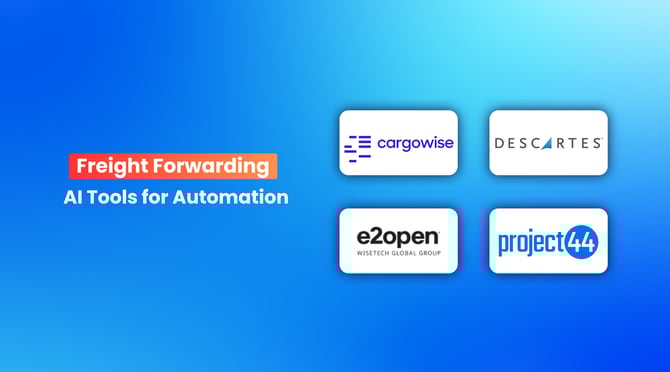
1. CargoWise
CargoWise is a globally recognized freight management platform built to support multi-country logistics operations. It streamlines documentation, customs compliance, and operational workflows together, simplifying operations for large freight forwarding organizations.
Key Features:
- End-to-end freight documentation and customs automation.
- AI-driven validation for trade and regulatory compliance.
Best for: Global freight forwarders handling high shipment volumes and cross-border compliance.
Related Read: From Predictive to Proactive: 5 Logistics AI Trends for 2026
2. Descartes Systems Group
Descartes Systems Group offers AI-driven logistics and trade compliance solutions. They have designed it to help businesses meet evolving regulatory requirements. Its platforms focus heavily on accuracy, risk mitigation, and compliance automation across international freight movements.
Key Features:
- Automated trade compliance with custom filing.
- Intelligent document screening with focus on regulatory checks.
Best for: Logistics providers operating in highly regulated trade environments.
3. GoComet
GoComet is an AI-powered freight management system that simplifies documentation while enhancing shipment visibility. It enables logistics teams to identify documentation gaps early. The approach proactively addresses regulatory issues across global import and export operations.
Key Features:
- AI-driven freight document automation
- Predictive alerts for documentation and regulatory risks
- Best for: Import/export-heavy logistics and supply chain teams
4. Wisor
Wisor is a contemporary AI-driven freight forwarding platform designed to replace legacy systems. It streamlines freight booking, helping forwarders improve operational efficiency. Besides, it supports thorough documentation and communication,n offering high customer responsiveness.
Key Features:
- Automated freight booking and documentation workflows
- AI-based document handling and communication management
Best for: Freight forwarders seeking alternatives to traditional freight forwarding software
5. E2open
E2open delivers a top-level freight and supply chain automation ecosystem. Its AI-powered platform centralizes documentation. Moreover, the system allows large organizations to manage regulatory complexity across extended logistics networks.
Key Features:
- End-to-end freight and supply chain automation
- Centralized document workflows with AI-driven insights
Best for: Enterprises requiring scalable, compliance-focused freight automation platforms
6. Project44 / ClearMetal
Project44 and ClearMetal specialize in AI-powered predictive logistics intelligence. Their platforms enhance freight visibility while proactively identifying exceptions that could impact shipment timelines and service reliability.
Key Features:
- Predictive logistics intelligence with exception handling
- AI-driven compliance and shipment visibility
Best for: Businesses are prioritizing real-time visibility and predictive compliance management.
Custom AI Solutions for Freight Document Automation
Most of the time, off-the-shelf freight automation tools address common compliance needs. But they often fall short for businesses operating across complex regions or legacy systems. Standard platforms lack the flexibility required to adapt to organization-specific workflows, compliance rules, and integration requirements.
Building custom AI-powered freight automation solutions allows logistics businesses to design systems aligned precisely with their operational realities.
Some of the key benefits include:
- Tailored compliance rules that adapt to regional regulations, trade policies, and cargo-specific requirements.
- Seamless legacy system integration with existing freight forwarding software, TMS, and ERP platforms.
- Scalable document workflows that grow with shipment volumes and changing markets.
From a strategic standpoint, custom AI-driven freight document automation delivers greater control, higher compliance accuracy, and long-term ROI—making it an ideal choice for logistics organizations aiming to scale freight automation without operational constraints.
How AI-Driven Freight Automation Improves Compliance Accuracy?
AI-driven freight automation significantly improves system accuracy by eliminating manual intervention. It helps logistics companies to infuse intelligence into documentation workflows.
By automating validations, logistics teams can focus on exception handling over error correction.
- Reduction in manual errors: AI-powered freight document automation cuts data entry mistakes as it validates information directly from source documents.
- Real-time compliance checks: Automated validation ensures documents meet custom and trade-related requirements before submission. It therefore reduces rejection risks.
- Automated audit trails and reporting: Every document update is checked for compliance action. It means easier audits and reporting.
- Faster customs clearance: Accurate, compliant documentation leads to quicker approvals, fewer holds, and reduced shipment delays.
Together, these capabilities make freight automation tools essential for logistics businesses aiming to improve compliance accuracy while accelerating global freight operations.
Freight Automation Tools vs Traditional Freight Forwarding Software
Understanding the difference between legacy systems and modern freight automation tools is critical for making the right technology investment. While traditional freight forwarding software supports basic operations, AI-powered platforms deliver intelligence, scalability, and proactive compliance management.
|
Aspect |
Traditional Freight Forwarding Software |
AI-Powered Freight Automation Software |
|
Documentation |
Manual or semi-automated processes |
Fully automated freight document automation |
|
Compliance |
Static, rule-based checks |
AI-driven, predictive compliance validation |
|
Error Handling |
Reactive issue resolution |
Proactive detection and prevention |
|
Scalability |
Limited by manual workflows |
High scalability with automated processes |
For the freight industry managing shipment status, order volumes, and regulatory complexity, AI-powered freight automation offers faster processing, improved compliance accuracy, and long-term operational efficiency—making it the clear choice at the decision stage.
How to Choose the Right Freight Automation Tool for Your Business?
Selecting the right freight automation tool depends on aligning technology with your long-term growth plans. An all-in-one approach rarely delivers optimal results in freight automation.
- Business size and shipment volume: High-volume operations benefit from enterprise-grade platforms. On the other hand, smaller teams may prefer lightweight, modular solutions.
- Compliance complexity: Consider the number of regions, trade lanes, and regulations you must support, and ensure the tool offers strong compliance automation.
- Integration needs: The platform should seamlessly integrate with your existing freight management system, TMS, and ERP systems.
- Customization vs SaaS trade-offs: SaaS tools offer faster deployment, but custom solutions provide control.
- Long-term ROI: Evaluate how automation reduces errors by speeding up clearance.
The right freight automation strategy balances immediate efficiency gains with future-ready logistics operations.
Future of Freight Document Automation and Compliance
The future of freight companies in the context of documentation and compliance is being shaped by autonomous systems that go beyond basic automation. AI agents are emerging as digital operators capable of handling end-to-end freight documentation—from real-time data extraction and validation to submission and exception resolution—without continuous human intervention.
Next-generation automation tools will enable predictive compliance, where AI anticipates regulatory risks before they occur and triggers self-correcting workflows to resolve issues automatically.
The growing role of Generative AI (GenAI) will further enhance document interpretation. It will work at addressing unstructured data, contextual regulations, and complex trade language, supporting more informed decision-making.
As global trade becomes more regulated and time-sensitive, freight automation will evolve into a core logistics differentiator. Organizations that invest early in intelligent freight document automation will gain faster clearance, higher compliance accuracy, and a sustainable competitive advantage in the logistics ecosystem.
How Signity Helps Build Intelligent Freight Automation Solutions?
Signity focuses on solving the real operational challenges logistics businesses face when adopting freight automation tools. Our approach is problem-driven, aligning AI solutions directly with business needs rather than forcing generic platforms.
- Complex manual documentation is slowing operations: We deliver custom AI and ML solutions for logistics that automate the end-to-end shipment process.
- High error rates and compliance risks: We build intelligent freight document automation platforms that ensure real-time accuracy and regulatory adherence.
- Disconnected legacy systems and data silos: We enable seamless integration with existing freight forwarding software, TMS, and ERP platforms.
- Scalability and security concerns: We design secure, compliant, and scalable AI architectures to support growing shipment volumes and evolving regulations.
By aligning technology with operational realities, Signity helps ventures from the logistics industry implement reliable, future-ready freight automation that drives efficiency, compliance, and long-term value.
Frequently Asked Questions
Have a question in mind? We are here to answer. If you don’t see your question here, drop us a line at our contact page.
What are freight automation tools?

How does freight document automation improve compliance?
Can freight automation tools integrate with existing freight forwarding software?
Yes, most modern freight automation tools and custom AI solutions are designed to integrate seamlessly with existing freight forwarding software, TMS, and ERP systems.
When should a business consider custom AI freight automation solutions?
Yes, most modern freight automation tools and custom AI solutions are designed to integrate seamlessly with existing freight forwarding software, TMS, and ERP systems.
When should a business consider custom AI freight automation solutions?
How do AI-powered freight automation tools improve regulatory compliance?
AI-powered freight automation tools help businesses meet regulatory compliance by validating documents in real time across the entire shipment lifecycle. Automated workflows reduce manual checks and errors. It allows freight management teams to check on exceptions early and maintain accurate freight audit records.
Can freight automation tools work with existing systems?
Yes, modern freight automation solutions are designed to integrate with existing systems such as freight forwarding software or ERP platforms. This allows businesses to improve data accuracy, enable real-time tracking, and achieve overall efficiency without replacing current infrastructure.
How does freight automation improve visibility and decision-making?
Freight automation provides advanced visibility across the shipment lifecycle through real-time tracking and performance metrics. With AI-powered insights and data-driven decisions, logistics teams can do warehouse automation, allocate resources better, manage exceptions faster, and maintain consistent service quality.
What operational cost benefits can businesses expect from freight automation?
How does document automation improve logistics operations and customer satisfaction?
Document automation reduces manual tasks across logistics operations by streamlining paperwork, tracking shipments, and automating workflow. It enables fewer delays in the shipping process and faster responses.
As a result, freight businesses can monitor shipments more effectively using detailed reports. It even allows them to focus on efficient operations, directly improving customer satisfaction with reduced labor costs.
How do AI-driven tools help optimize routes and manage ocean freight operations?
AI-powered tools use advanced analytics and route optimization. They analyze delivery routes and monitor shipments. Based on data, they optimize routes in real time for maximum productivity.
The approach is more valuable for ocean freight. It is because tracking shipments and managing delays is critical in ocean freight.
By improving route optimization and shipment visibility, freight businesses can achieve better control of logistics operations.