


.png?width=27&height=27&name=Group(1).png)

-1.svg)
-1.svg)


-2.svg)


%201-1.webp?width=148&height=74&name=our%20work%20(2)%201-1.webp)




.svg)





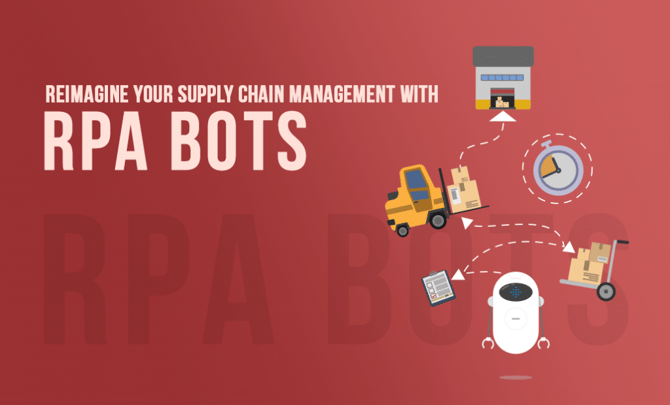
AI inventory management is the use of artificial intelligence to study inventory data and forecast demand. It suggests when to reorder stock and takes over routine tasks that once needed a person's attention.
A traditional system runs on fixed rules that someone wrote in and left alone. AI keeps watching instead. It tracks sales patterns, supplier reliability, seasonal swings, and daily operations, and gets sharper the longer it runs.
Managing inventory used to mean counting stock and cutting purchase orders. That's a small slice of the job today. A company might sell through its own site, a marketplace, and a few retail partners all at once, routing orders through different warehouses depending on where the customer sits. A reorder built on last month's numbers can go stale before anyone acts on it. What matters is the shelf right now, not last quarter's spreadsheet.
Traditional systems adapt with shifting demand and supply delays, causing stockouts and inefficient inventory spending. AI spots patterns and recommends action while RPA handles the repetitive updates. Together, they make inventory management faster, more accurate, and ready for disruption.
According to the Information Service Group, over 72% of industries have employed Robotic Process Automation to automate mundane tasks, and streamline processes. Supply Chain and Inventory Management are no foreign to this concept.
RPA in Inventory Management: The Need for Automation
Modern inventory operations require more than task automation. Organizations need systems capable of predicting demand, identifying inventory risks, and recommending corrective actions before operational issues occur. This shift has expanded inventory automation from rule-based workflows to intelligent decision-making powered by artificial intelligence.
RPA continues to play an important role by executing repetitive activities, while AI provides the intelligence that guides inventory decisions.
Supply chains and management is integral to the functioning of a myriad of companies across all industries.
Take Global Retail Organizations, for example; These companies have established processes and systems to deliver products from suppliers to customers, monitor inventory levels, track shipments, and a lot more.
Must Read: 5 Amazing Examples Of Robotic Process Automation In The Real World
Since all the said processes are repetitive in nature and highly dependent on the systems that run in the background- they serve as an apt model to benefit from automation technologies like RPA.
Industry Challenges AI Inventory Management Solves
An unorganized and mismanaged inventory management system is no better than a bottleneck. That is to say, it obstructs the seamless flow of operations, and hinders the growth strategies in place.
The retail industry is prone to copious industry management challenges that automation seeks to solve. But before exploring RPA in inventory management use cases, let’s briefly touch on the challenges:
1. Uneven Demand
Customer demand changes rapidly due to seasonality, promotions, economic conditions, competitor activity, and shifting consumer preferences. Traditional forecasting methods rely heavily on historical data, making it difficult to anticipate sudden demand fluctuations. This often results in excess inventory or costly stockouts.
2. Limited Real-Time Inventory Visibility
Inventory decisions are only as reliable as the data behind them. Many organizations still manage inventory across disconnected ERP systems, warehouse platforms, supplier portals, and spreadsheets. This fragmented environment makes it difficult to maintain accurate stock visibility across locations, increasing the risk of stockouts, duplicate orders, and delayed fulfillment.
3. Legacy Systems
Legacy inventory platforms often lack the flexibility to support predictive analytics, cloud integrations, and real-time inventory synchronization. Modern AI solutions can integrate with existing ERP and warehouse management systems, allowing organizations to modernize inventory operations without replacing their entire technology landscape.
4. Increasing Supply Chain Disruptions
Global supply chains continue to face disruptions caused by transportation delays, supplier constraints, geopolitical events, and changing customer expectations. Static inventory planning cannot respond quickly enough to these situations. AI models continuously monitor operational data and external signals, helping businesses identify potential shortages early and adjust replenishment strategies before disruptions affect customers.
Nonetheless, shifting to a modern, new-age, RPA automated e-commerce system seems a pretty good solution- but this introduces a new set of multiple challenges.
Why AI and RPA Work Better Together?
AI and RPA solve different problems within inventory management. AI focuses on making better decisions by analyzing historical and real-time data. RPA focuses on executing repetitive operational activities accurately and consistently.
When deployed together, AI identifies what action should be taken while RPA performs the action automatically across connected systems. For example, AI may forecast a product shortage based on demand trends. RPA can immediately generate a purchase order, notify suppliers, update ERP records, and trigger internal approvals without manual intervention.
This combination creates an intelligent inventory management process where routine work becomes automated while inventory decisions become increasingly data driven.
| Artificial Intelligence | Robotic Process Automation |
| Predicts demand | Executes workflows |
| Learns continuously | Follows predefined rules |
| Identifies patterns | Processes transactions |
| Improves forecasting | Reduces manual effort |
RPA in Inventory Management Use Cases: What to Automate & Why?
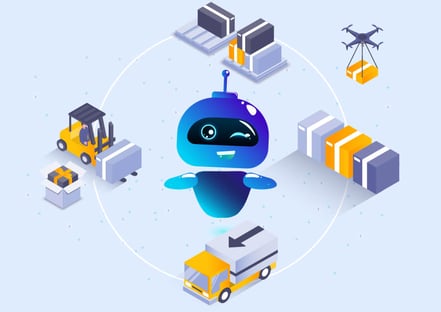
1. Eliminate Manual Administrative Tasks
Raising and processing purchase order forms a better part of the inventory management system.
Implementing RPA will help your retail business identify different inventory levels and match them with/against associated stock values.
2. Predict Demand More Accurately
AI analyzes historical sales, seasonal demand, promotions, regional buying behavior, supplier lead times, and external market factors to improve inventory forecasts. More accurate forecasting enables businesses to maintain optimal inventory levels while reducing excess stock and preventing stock shortages.
3. Detect Inventory Exceptions Automatically
AI continuously monitors inventory activity and identifies unusual purchasing patterns, unexpected stock movements, supplier delays, or inventory discrepancies. Instead of waiting for scheduled reports, operations teams receive alerts early enough to investigate and resolve issues before they affect fulfillment.
4. Over-the-top Seamless Integration with Legacy Systems
The application of Robotic Process Automation is not limited to certain inventory management processes.
A well planned RPA implementation will seamlessly integrate with other legacy systems in place, automating processes across multiple software, systems, and tools.
What are the Challenges of RPA Implementation in Inventory Management?
RPA and AI, albeit promising, are still rudimentary. Implementing these technologies in your inventory management system or any other process for that matter will bring forward a few challenges.
Here’s a Deloitte report that reflects upon RPA, it’s advantages and implementation challenges in detail.
1. Employee Engagement
For successful RPA implementation not only in inventory management but across an organization, tt’s important to take the buy-in from all your current employees.
Employees’ acceptance helps with reducing resistance, scale operations, and streamline supply chain network.
2. IT Integration & Support
Though a business initiator can implement RPA with ease, it’s always beneficial to include and consider the support of your IT personnel- for they can bring additional value and share valuable insights for RPA implementation.
3. Data Quality and System Readiness
AI models rely on accurate inventory, supplier, and sales data. Inconsistent product information, duplicate records, or disconnected systems reduce forecasting accuracy and limit automation outcomes. Organizations should establish strong data governance before scaling AI-powered inventory initiatives.
4. Process Standardization
RPA ‘bots’ work best when the processes to be automatized are simple, and repetitive in nature. If a business process becomes complex, not only RPA integration gets difficult but the implementation and operational costs also go up.
Benefits of Implementing RPA in Inventory Management
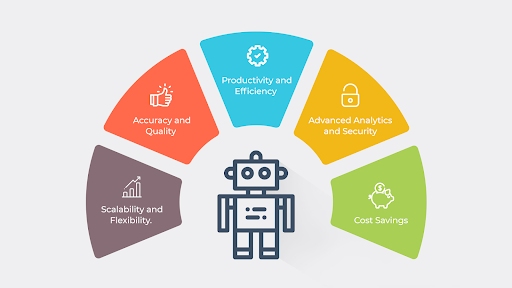
There are innumerable benefits of RPA for Inventory management. Since stating all of ‘em would turn this article into a guide, we’ve listed a few key benefits of RPA for your business’ supply management system:
1. Lower Carrying Costs
AI continuously evaluates demand patterns, inventory turnover, and supplier lead times to recommend optimal stock levels. This reduces excess inventory, minimizes storage expenses, lowers working capital requirements, and improves overall inventory utilization without affecting product availability.
2. Faster Inventory Decisions
AI processes operational data in real time and identifies inventory issues before they impact fulfillment. Combined with RPA, it automates routine actions such as purchase order creation, stock transfers, and inventory updates, enabling faster business decisions.
3. Higher Inventory Accuracy
AI validates inventory data across multiple business systems and detects inconsistencies before they affect operations. Automated inventory updates, real-time synchronization, and continuous monitoring improve stock accuracy while reducing manual errors and reconciliation efforts.
4. Automated Inventory Management
Inventory Management, if not the most important, is one of the crucial aspects of the supply chain network. Being aware of the current stock levels helps you prepare to meet with the fluctuating demand.
Automating your inventory management system notifies you about the current stock levels, and you can even reorder your primary offerings when/if they go below a certain specified threshold level.
5. Order Processing
Supply chain networks are primarily maintained for 2 reasons: Order placements, and successful deliveries. Placing an order can be broken down into 3 essential steps:
- Selecting the product
- Payment Processing
- Order Confirmation
Processing orders, payments, and parsing confirmation are 3 major areas that could benefit from RPA implementation. Here’s how:
Using smart RPA bots, order details can be automatically ingested into the database; and upon successful payment confirmation (a specified task), an auto-generated confirmation email and text can be sent to the email provided by the concerned customer.
4. Demand & Supply Forecasting
Planning is critical to the inventory management aspect of any supply chain network. Successful planning involves collecting data from various sources, analyzing the sales trend, interpreting the data, and communicating the findings with the team.
By implementing AI & RPA in inventory management you can easily automate all these processes, and conduct a thorough analysis whilst eliminating any clerical errors.
How AI Inventory Management Works?
AI inventory management connects operational data from across the supply chain to automate decisions and improve inventory planning. It combines predictive intelligence with workflow automation to maintain accurate stock levels while reducing manual effort.
The process begins with data collected from ERP systems, warehouse management systems, point-of-sale platforms, supplier databases, and procurement applications. AI analyzes this information alongside historical sales, demand trends, seasonal patterns, and supplier performance to forecast inventory requirements and identify potential shortages or overstock situations.
Based on these predictions, RPA automates operational tasks such as generating purchase orders, updating inventory records, notifying suppliers, synchronizing inventory across systems, and triggering replenishment workflows. This combination enables organizations to respond faster to changing demand while improving inventory visibility, forecasting accuracy, and operational efficiency.
Best Practices for AI Inventory Management
Successful AI inventory management begins by identifying repetitive, high-volume inventory processes that offer the greatest automation potential.
- Before deploying AI models, organizations should improve data quality by standardizing product information, removing duplicate records, and ensuring inventory data remains accurate across systems.
- Integrating ERP, warehouse management, procurement, logistics, and sales platforms provides AI with a unified view of inventory operations.
- Businesses should establish measurable KPIs, including forecast accuracy, inventory turnover, carrying costs, stock availability, and order fulfillment rates, to evaluate performance consistently.
- AI models should also be monitored regularly and refined as customer demand, supplier performance, and business priorities evolve, ensuring recommendations remain accurate and operational outcomes continue to improve over time.
Impact of RPA on Inventory Management & Supply Chain
The world is turning Digital, and to grab a bigger piece of the consumer pie, and fetch fruitful results, retailers need to implement RPA in Inventory management.
RPA influences supply chain management in varied ways, offering benefits such as:
Improved agility, enhanced efficiency, increased capacity, a higher level of customer satisfaction, and more.
But RPA services are not one-size-fits for all. Different retail businesses work with different capacities and, but obvious, share diverse needs.
Putting AI and RPA together, and utilizing them for the benefit of your business is an understandable challenge; what you need for successful RPA implementation is a service provider who could deliver a tailored RPA solution to your specific requirements.
Build Intelligent Inventory Operations with Signity
Modern inventory management requires more than automating repetitive tasks. It demands a strategy that combines AI, automation, and connected enterprise systems to improve operational performance and support better business decisions.
At Signity Solutions, we help organizations modernize inventory operations through AI-powered forecasting, intelligent automation, ERP integration, and custom inventory management solutions. Our experts design scalable architectures that improve inventory visibility, automate routine workflows, and integrate seamlessly with existing business systems.
Whether you are upgrading legacy inventory platforms or building an intelligent supply chain ecosystem, we help identify practical automation opportunities and implement solutions that deliver measurable improvements in inventory accuracy, operational efficiency, and supply chain performance.
Conclusion
AI inventory management is becoming an operational requirement for organizations that need greater visibility, faster decision-making, and resilient supply chains.
While AI improves forecasting and recommends inventory actions, RPA services executes routine processes quickly and consistently, creating a more intelligent inventory ecosystem.
Businesses that modernize inventory operations today are better positioned to reduce costs, improve service levels, respond to market changes, and build supply chains that can adapt to future business demands with confidence.

Mangesh Gothankar


Ashwani Sharma
Achin Verma






.png?width=352&name=top-ai-tools-financial-services%20(1).png)
%20(1).png?width=352&name=agentic%20rag%20(2)%20(1).png)