


.png?width=27&height=27&name=Group(1).png)

-1.svg)
-1.svg)


-2.svg)


%201-1.webp?width=148&height=74&name=our%20work%20(2)%201-1.webp)




.svg)






As the payments get digital, the number of financial crimes is on a continuous rise. Financial organizations often face challenges in identifying theft and preventing payment fraud.
It has led to an urgent need to integrate AI into fraud detection systems to ensure that customer's data is protected at all times. Technology like machine learning models and natural language processing can quickly scan irregular transaction data to prevent anomalies.
AI development for FinTech services can help your business build custom solutions to prevent fraudulent transactions and provide a better customer experience.
This blog will help you discover the role of AI in preventing identity theft and why your FinTech business needs this technology.
Let's begin by defining AI for fraud detection.
Key Takeaways
- AI-powered fraud detection systems analyze transaction patterns, user behavior, and historical data to identify suspicious activities with greater speed and precision than traditional methods.
- Continuous learning from financial data enables AI to adapt to new fraud techniques, reducing false positives and enhancing real-time fraud prevention.
- By automating Anti-Money Laundering (AML) compliance and transaction monitoring, AI helps financial institutions meet regulatory requirements efficiently.
- Allocating resources to AI-driven fraud detection ensures stronger cybersecurity, better risk assessment, and improved customer trust in digital financial services.
Best Practices for Fraud Detection & Prevention in FinTech
In today’s fast-evolving financial landscape, protecting businesses and customers from fraud has become more critical than ever. AI empowers FinTech businesses with advanced tools to detect, prevent, and mitigate financial fraud effectively, ensuring security and compliance.
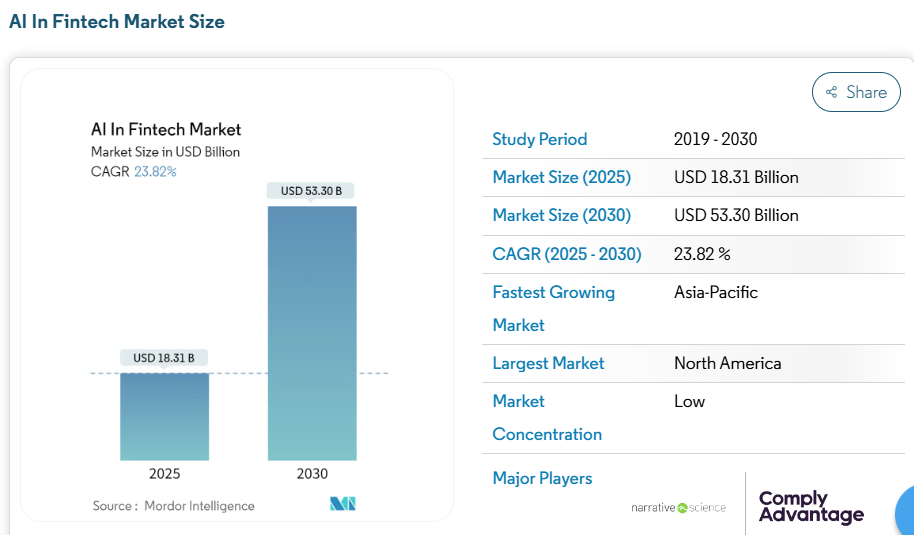
A report shows that the market size of AI in the FinTech market is expected to reach USD 53.30 billion by 2030.
1. Fraud Detection Systems & AI Fraud Prevention Software
The foundation of any serious anti-fraud strategy should be a robust fraud detection system. Modern AI-driven fraud prevention software can analyze huge volumes of transaction data in real time, detect subtle anomalies, and flag suspicious activity instantly. In fact, recent industry data shows that about 87% of global financial institutions have deployed AI-driven fraud detection systems as of 2025.
These AI fraud detection finance systems dramatically outperform legacy, rule-based solutions. Artificial Intelligence continuously monitors financial transactions and identifies patterns or behaviors that could indicate fraudulent activities by using machine learning models. They can detect anomalies like sudden large withdrawals, false positives, or purchases from unfamiliar locations can be detected, flagging them for review. This real-time capability helps businesses stop fraud before it causes significant losses.
Use a scalable, AI-powered fraud detection platform, whether on-premises or cloud, rather than relying solely on static rules. Ensure the AI for fraud detection software supports real-time monitoring, integration with your transaction processing infrastructure, and flexibility to add new detection rules or ML models easily.
2. Machine Learning (ML) for Fraud Detection & Fraud Scores
Machine Learning is the engine behind adaptive, intelligent fraud detection. Unlike static rule-based systems which are rigid and predictable, ML models learn from real historical data, adapt to evolving fraud schemes, and uncover sophisticated patterns that human reviewers or basic rules would miss.
Supervised models like Random Forest, Gradient Boosting, Neural Networks trained on labeled fraud vs legitimate data can classify high-risk transactions with high accuracy. Unsupervised models like clustering, anomaly detection, isolation forest, etc. help detect previously unseen fraud patterns by flagging outliers.
Use a hybrid ML-based approach like using supervised models for known fraud patterns and unsupervised/anomaly detection for unknown/fresh fraud tactics. Assign risk scores to transactions/users.
3. Strong Authentication Processes & Identity Verification
Preventing fraud starts with ensuring that users are who they claim to be. So, strong authentication methods like multi-factor authentication and device fingerprinting, combined with rigorous identity verification, are critical to develop a first line of defense.
When it comes to ai fraud detection in financial institutions, ensure to implement biometric authentication, MFA, documents, and identity verification at account creation, rather than relying only on passwords, to reduce fraudulent account access.
4. Transaction Monitoring, Alerts & Limits
Every transaction should be analyzed for risk. AI-powered fraud detection for digital payment systems excel at this because they can check dozens of variables far faster than humans or traditional rule engines. This helps detect suspicious events like unusually large payments, sudden frequency spikes, device or location changes, and duplicate transactions as they occur and trigger alerts or block/hold transactions. By leveraging machine learning, AI adapts to emerging fraud patterns, enhancing threat detection. This proactive approach minimizes financial risks and builds customer trust in digital payments.
Also, set sensible transaction amount limits or thresholds, especially for new or unverified users. For example, a lower limit for new accounts or first-time large payments can reduce exposure while the user’s trust/verification level is low. As user trust grows, incremental limits can be permitted.
Monitor every transaction in real time. Set dynamic risk thresholds, enforce transaction limits for new/low-trust customers, and trigger alerts for transactions crossing risk thresholds.
5. Behavior Analytics & Behavioral Biometrics
Modern fraudsters often bypass basic checks, but behavior is harder to fake. By analyzing user behavior like how they type, device usage patterns, login timing, transaction habits, navigation behavior, frequency, geographic patterns, etc., AI-powered behavior analytics tools can build a “baseline fingerprint” for legitimate users.
Implement behavior analytics and biometrics along with traditional transaction monitoring. Use device and behavioral fingerprinting for login and transaction risk scoring, and treat any sudden deviation from user behavior as a trigger for review or extra verification.
6. Regulatory Compliance Automation
For any financial or fintech organization, compliance with regulatory standards is non-negotiable. Automating compliance-related checks including identity verification, transaction monitoring for suspicious activity, and AML screening, reduces manual workload and helps ensure accuracy.
AI automates the detection of money laundering and fraudulent transactions by analyzing vast amounts of transaction data to uncover hidden patterns that suggest illegal activities. It identifies suspicious activities like layering legitimate transactions, frequent small transfers, or use of high-risk accounts, enabling AI-driven fraud detection firms to meet compliance requirements more effectively. This is best achieved through AI-driven compliance automation, which reduces manual errors and accelerates risk detection.
Use encryption like TLS/SSL for data in transit, and strong encryption for data at rest, secure APIs with authentication/authorization, rate-limiting, input validation, and logging. Integrate compliance automation with your fraud detection system to automatically generate alerts, flags, and audit logs.
7. Customer Education for Fraud Awareness and Prevention
No system can stop all fraud, so some risk remains with users. Teaching customers safe habits, like using strong passwords, avoiding phishing, checking website addresses, and turning on MFA, is essential. When customers are aware, they help prevent social engineering and other fraud.
Run regular customer awareness campaigns, include security tips in user onboarding, send periodic alerts/communications about common fraud threats, and offer easy-to-use tools for customers to report suspicious activity or confirm unusual transactions.
8. AI-Driven Credit Risk Assessment for Safer Lending Decisions
AI and natural language processing tech evaluate the creditworthiness of individuals or businesses by analyzing financial data, spending habits, historical repayment data, and external factors like market trends. It helps lenders make informed decisions while reducing the risk of defaults, ensuring fair and accurate credit assessments. To ensure accurate and unbiased credit evaluations, adopting AI-powered credit risk assessment is a proven best practice.
Do you own a business in the insurance industry? Check out how Artificial Intelligence is transforming the insurance industry.
9. Advanced AI-Powered Customer Identity Verification Process
Artificial intelligence fraud detection enhances identity verification by using biometric authentication methods like facial recognition or fingerprint scanning. It also verifies the authenticity of documents, such as ID cards or passports, preventing identity theft and unauthorized access to financial accounts.
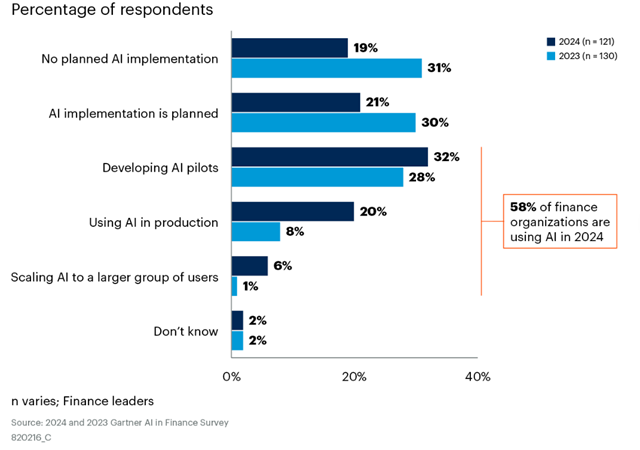
A report by Gartner shows that about 58% of FinTech businesses are using AI for various purposes.
FinTech fraud detection firms should adopt strong, risk-based authentication methods like behavioral checks to verify identities with higher accuracy.
10. AI Agents for Autonomous Fraud Detection and Rapid Response
AI agents work as constant fraud watchdogs, monitoring transactions, user behavior, and system activity in real time. They learn from past fraud cases, adjust to new threats, and respond right away by blocking suspicious transactions, requiring extra authentication, or notifying risk teams.
Using AI agents as a best practice helps FinTech companies:
- Reduce detection time from hours to milliseconds
- Automate routine fraud analysis tasks
- Lower false positives through continuous learning
- Strengthen fraud prevention without increasing operational workload
How do these Best Practices help Business Leaders?
Risk reduction and cost savings: As digital payments grow, fraud can lead to major financial losses, reputational harm, and regulatory fines. A strong AI and ML fraud detection system can greatly lower losses and reduce false positives.
- Scalability and future-proofing: When transaction volumes increase, for example, during a digital payments augmentation, manual reviews are no longer practical. Automated, ML-driven systems can handle this growth smoothly.
- Customer trust and retention: Reliable security builds trust. Customers are more likely to stay with platforms that protect their assets and data.
- Regulatory compliance and audit readiness: Automated compliance, monitoring, and audits help institutions keep up with regulatory requirements like KYC, AML, and data privacy. This reduces legal and regulatory risks.
- Adaptability to evolving threats: Fraud changes quickly, with new risks like synthetic identities, deepfakes, bot attacks, and organized fraud rings. ML-based detection and shared intelligence help keep defenses current.
The Role of AI Investment in Fraud Detection and Cybersecurity
Allocating an AI and machine learning budget becomes crucial for guaranteeing strong security measures as FinTech organizations place a higher priority on fraud detection. To evaluate the long-term advantages of investing in AI, CFOs must perform in-depth due diligence and investment analysis, especially in areas like cybersecurity, payment automation, and portfolio monitoring.
AI can identify fraud threats and enhance decision-making by utilizing predictive analytics, which aids organizations in efficiently protecting client data and financial fraud.
The graph below shows ai in fraud management market that majority of insurers see budget as a hurdle and have not yet invested in the fraud detection systems.
.png?width=674&height=337&name=unnamed%20(3).png)
By replicating possible dangers and spotting weaknesses before they are taken advantage of, the emergence of generative AI improves fraud detection even further. Moreover, by reducing the risks connected to extensive fraud attempts, AI-driven fraud protection helps financial institutions plan their departure strategy.
Fraud detection is a crucial area of focus in contemporary FinTech investment strategies since investing in AI-powered security solutions guarantees regulatory compliance and lowers financial losses.
Build Custom AI Fraud Detection Solutions With Us
Want a fraud detection system that helps your FinTech business stay safe? Meet our team of AI experts at Signity Software, who can help you build tailored solutions to prevent fraud and identify unusual patterns for robust safety.
Our AI and machine learning models will ensure that you get the best payment fraud detection systems and fintech fraud prevention to provide an excellent experience to your customers. Get in touch with our team today to discuss your business needs.
Frequently Asked Questions
Have a question in mind? We are here to answer. If you don’t see your question here, drop us a line at our contact page.
What is AI Fraud Detection?

How does AI Improve Fraud detection in FinTech?
AI improves fraud detection by analyzing large datasets and identifying fraud patterns using AI algorithms. By integrating machine learning and leveraging continuous learning, AI adapts to new data and fraud tactics, making it highly effective in detecting fraudulent behavior across user accounts-based systems.
Can AI Prevent Identity theft in FinTech businesses?
Yes, AI prevents identity theft by analyzing input data such as biometric details and user account based verification. By detecting deepfake technology and suspicious access attempts across multiple accounts, it safeguards customers and reduces fraudulent behavior.
How does AI Contribute to Cybersecurity in Financial Services?
AI enhances cybersecurity by continuously learning from new data to identify fraud patterns and protect user accounts-based systems. Using AI algorithms and analyzing input data from multiple transactions prevents unauthorized access and mitigates risks from deep fake technology and advanced fraud tactics.
What are the leading AI platforms for fraud detection in financial services?
How does PayPal use AI for fraud detection?
What are the methods of fraud detection in banking?
How does AI detect anomalies in financial transactions?





.png?width=352&name=Real-Time%20Payment%20Intelligence%20Systems%20AI%20Architecture%20and%20Implementation%20Guide%20(1).png)

.png?width=352&name=top-ai-tools-financial-services%20(2).png)